Guinea Fowl Farming in Cameroon: A Hardy, Profitable Bird
The guinea fowl is a hardy bird, prized for its tasty meat and well valued on Cameroonian markets. More resistant than the chicken and able to forage outdoors, it makes an excellent farming option, complementing or replacing conventional poultry.
Why raise guinea fowl
Guinea fowl appeal through their hardiness: they resist some diseases better than chickens, make good use of free-range runs and eat insects and plants. Their firm, flavourful meat and their eggs sell at good prices, with demand peaks during festivities. Once well established, the activity needs few inputs — ideal for diversifying a farm.
Setting up
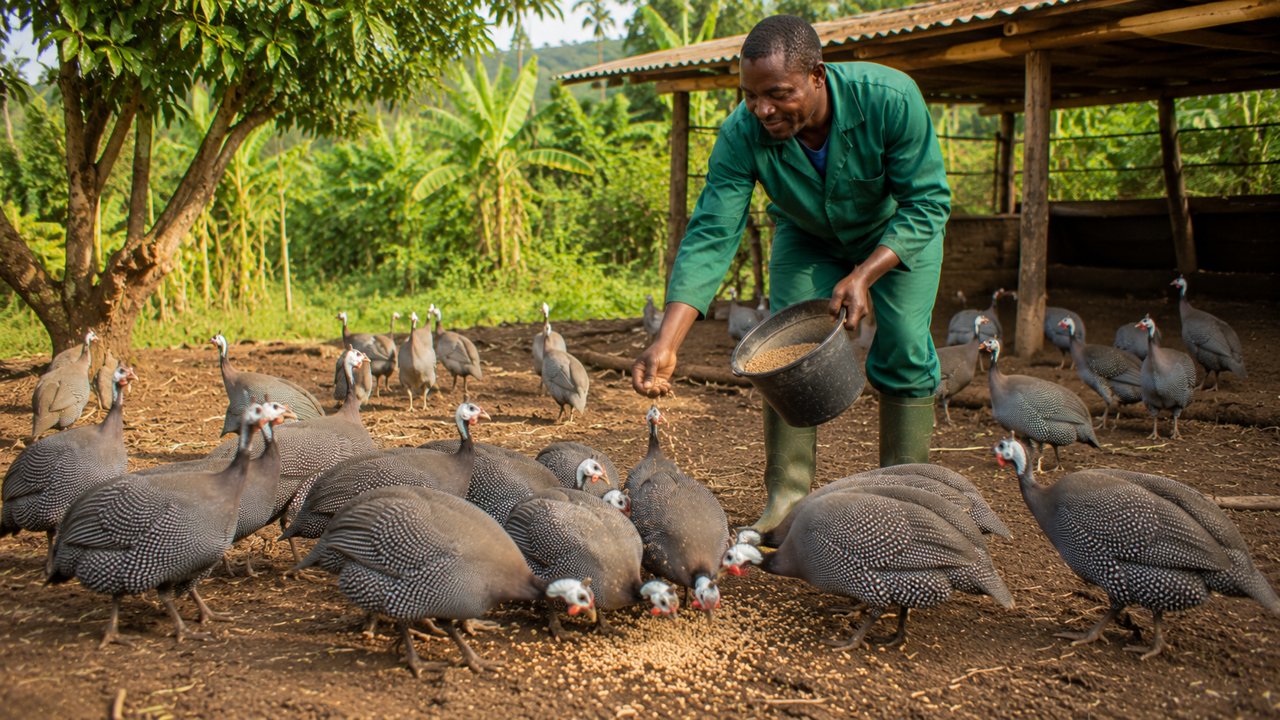
Guinea fowl need a dry, secure shelter for the night and bad weather, plus a fenced outdoor run. Being good flyers, they can escape: a suitable fence or regularly clipped wings prevents getaways. The shelter must be clean, airy and predator-proof. Young keets are fragile in the first weeks, needing warmth, cleanliness and rich feed; once past this stage, guinea fowl become very robust. Start with healthy birds from a reliable source.
Feeding and management
Outdoors, guinea fowl find part of their food (insects, grasses, seeds), cutting costs. A balanced feed supplement, especially at start-up and during laying, supports growth and egg production. Prevention is essential: clean shelter, healthy water, regular observation and vaccination as advised by a vet. Guinea fowl live well in groups; a well-managed flock limits stress and losses.
Outlets and profitability
Live birds, meat and eggs sell to households, restaurants and markets, with strong valorisation during celebrations. Profitability rests on mastering the start-up phase (keet mortality), a well-used run and sales timed to demand peaks. It is a niche less competitive than broiler farming.
In summary
Hardy, tasty and well valued, the guinea fowl is an ideal bird to diversify a farm. Special care for keets, a secure shelter, free-range access and sanitary prevention are the keys to profitable guinea fowl farming in Cameroon.
Read more
Partager :

Discover more from Jangolo Blog
Subscribe to get the latest posts sent to your email.