Snail Farming in Cameroon: Getting Started with Heliciculture
Discreet but promising, heliciculture — snail farming — is attracting more and more agricultural entrepreneurs in Cameroon. Low start-up cost, small space required and steady demand, especially in cities and catering: snails offer an excellent effort-to-return ratio. Here is how to start.
Why raise snails
The giant African land snail is widely consumed in Cameroon and still largely gathered from the wild, creating a deficit that farming can fill. Heliciculture needs little capital, little space and simple inputs. Snail meat, rich in protein and low in fat, is sought by households, restaurants and urban markets, securing outlets.
Setting up the snailery
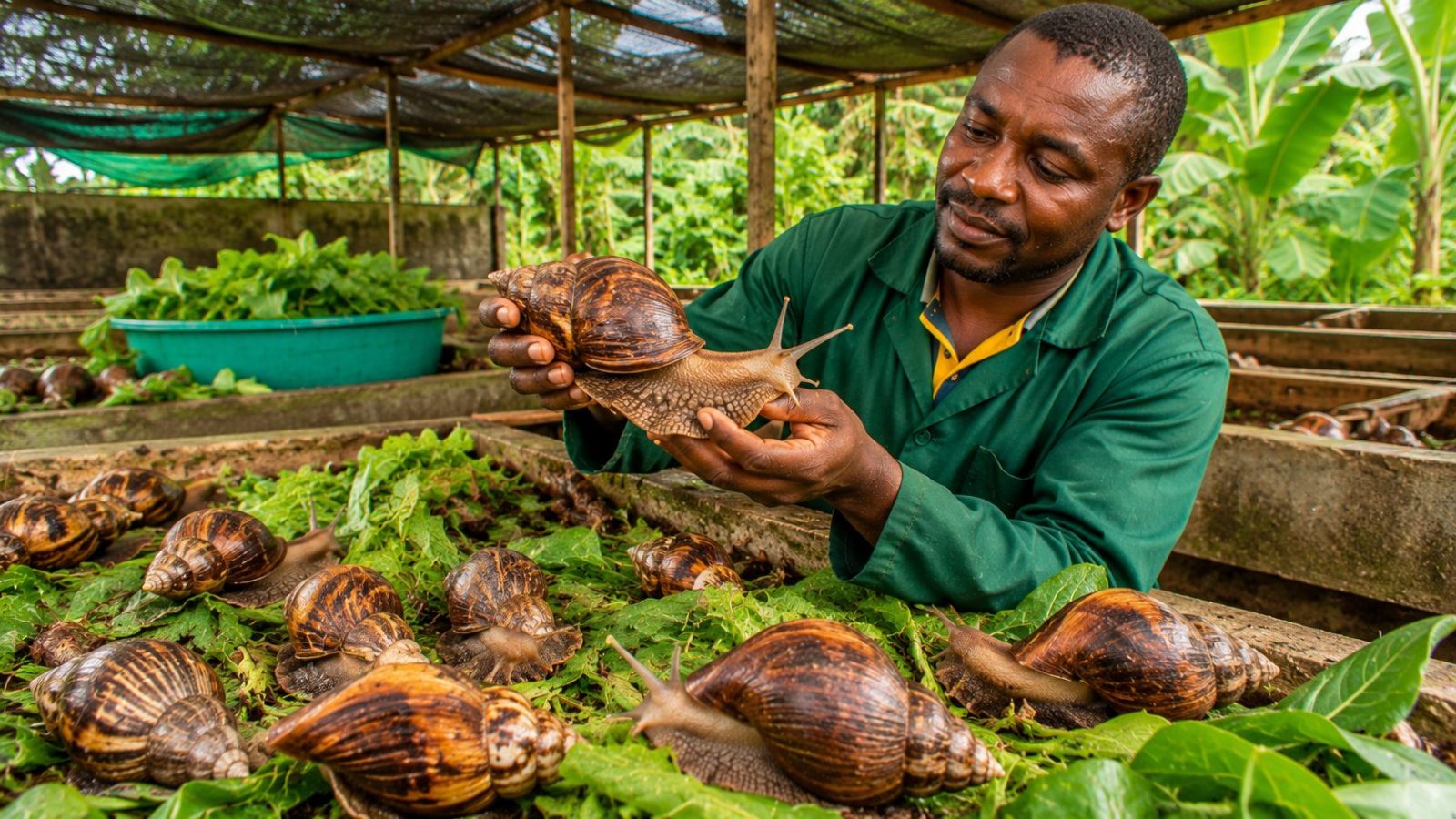
Farming takes place in pens, bins or parks protected from predators (rodents, ants, birds) and escapes. Snails need a cool, shaded, humid environment: loose, rich soil, shelter plants and controlled humidity recreate their natural habitat. Start with healthy breeders; the snail’s high reproductive capacity allows fast herd growth from a small number of animals.
Running the farm
The snail is herbivorous: leaves, peelings, fruit and vegetables, plus a calcium source essential for shell formation. Varied, regular feeding speeds growth. Maintaining good humidity is key — too dry an environment halts activity. Clean pens limit disease and predators. Snails reach market size in a few months depending on feeding and conditions; harvest the largest while keeping breeders for the next batch.
Outlets and profitability
Snails sell live or prepared, to households, restaurants and markets. Margin is attractive because input costs stay low and reproduction is fast. As with any farming, regular feeding, humidity control and predator protection make the difference between a trial and a profitable activity.
In summary
Snail farming is one of the most accessible activities in Cameroonian agribusiness: little capital, little space, fast reproduction and a buoyant market. Success rests mainly on a humid, clean environment, good calcium-rich feeding and effective predator protection.
Partager :

Discover more from Jangolo Blog
Subscribe to get the latest posts sent to your email.