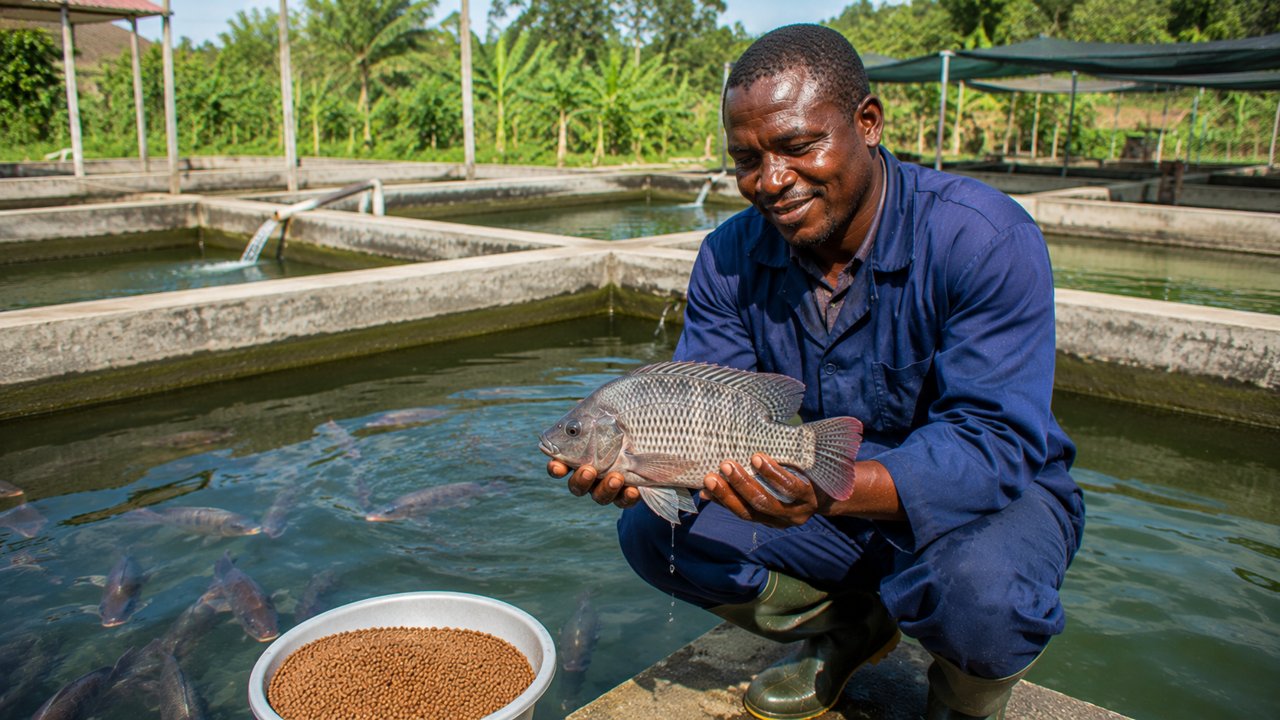
Tilapia Farming in Cameroon: A Beginner’s Guide
Alongside catfish, tilapia is the other star of Cameroonian fish farming. A hardy fish with prized flesh and easy reproduction, it suits both pond and tank systems. Well managed, tilapia farming offers solid outlets and an accessible activity.
Why farm tilapia
Tilapia is among the most consumed fish in Cameroon. It adapts to varied conditions, tolerates high densities and feeds on both natural and compound feed. Its white, low-bone flesh is in high demand, fresh or smoked — an ideal species to start with or to complement a catfish operation.
Choosing your system
Fertilised earthen ponds are economical, as fish find part of their food naturally, but need space and water control. Concrete or tarpaulin tanks allow more intensive farming with better control, suited to small and peri-urban spaces.
Running the farm
Tilapia breeds very easily, which can lead to overpopulation and small fish. To avoid this, farmers often raise male (monosex) fingerlings, which grow faster and more evenly — so fingerling quality is decisive. Tilapia values compound pellets plus the pond’s natural productivity; regular, well-dosed feeding optimises growth and feed conversion, the main cost. Clean, well-oxygenated, renewed water reduces stress and disease.
Harvest, market and profitability
Tilapia reaches market size in a few months and sells live, fresh or smoked, to households, restaurants and markets. Profitability rests on controlling reproduction (to avoid small fish), feed efficiency and a good survival rate. Combining tilapia and catfish diversifies production and outlets.
In summary
Tilapia is an ideal gateway into fish farming: a robust species, a solid market, pond or tank rearing. Success comes down to quality fingerlings, reproduction control, good feeding and healthy water.
Read more
Partager :

Discover more from Jangolo Blog
Subscribe to get the latest posts sent to your email.