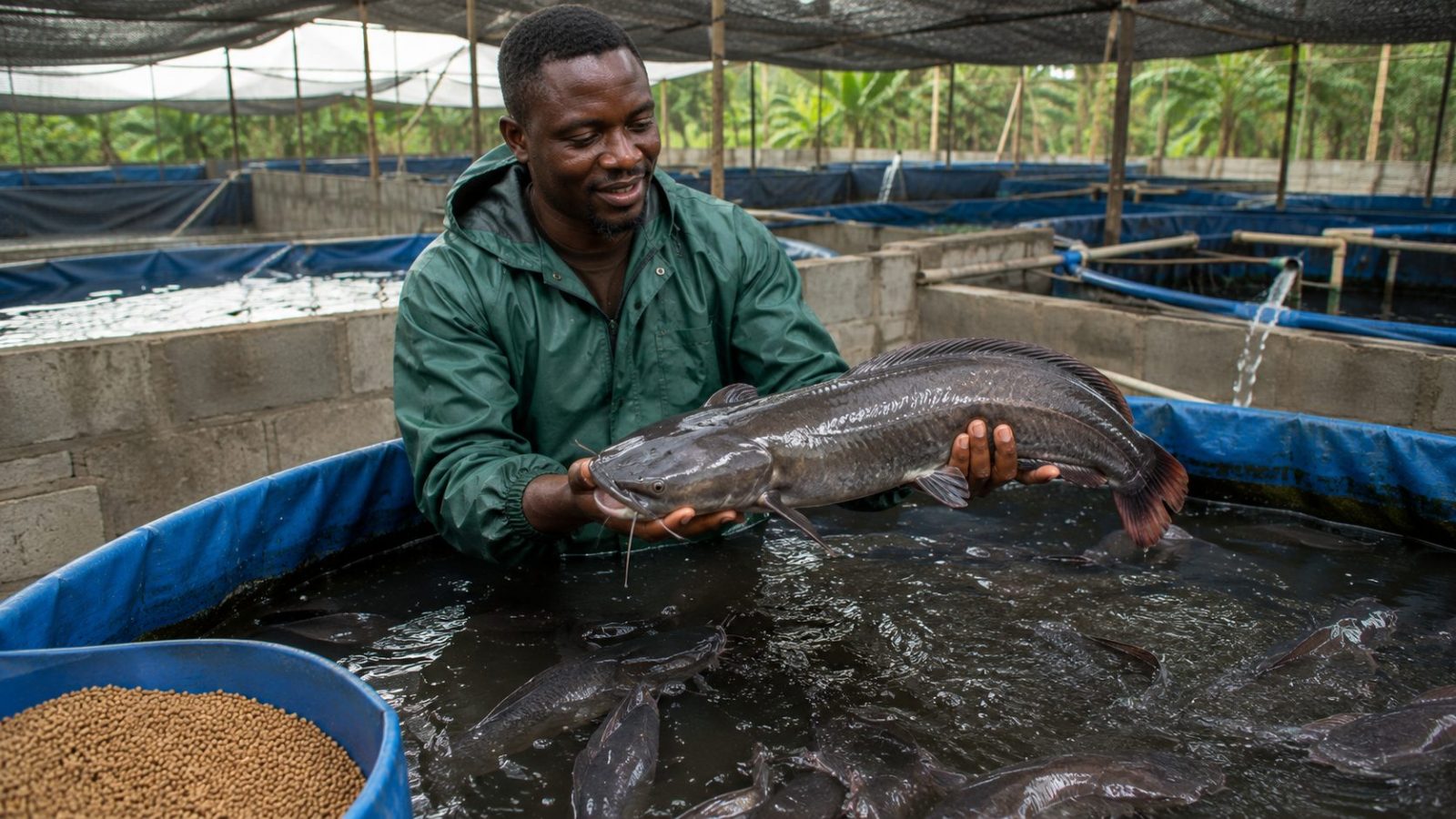
Catfish Farming in Cameroon: Getting Started in Aquaculture
Fish farming is winning over more and more agricultural entrepreneurs in Cameroon, and the African catfish (Clarias gariepinus) is its star. Hardy, fast-growing and highly prized at market, catfish suits small or medium-scale farming. Here is how to get started.
Why farm catfish in Cameroon
Catfish offers rare advantages for a beginner. It tolerates oxygen-poor water thanks to its aerial breathing, handles high densities, and grows fast: in five to seven months a fingerling can reach market size. Demand is strong, both fresh and smoked, which secures outlets. You can start in the backyard with a few tanks, then scale up.
Choosing your system
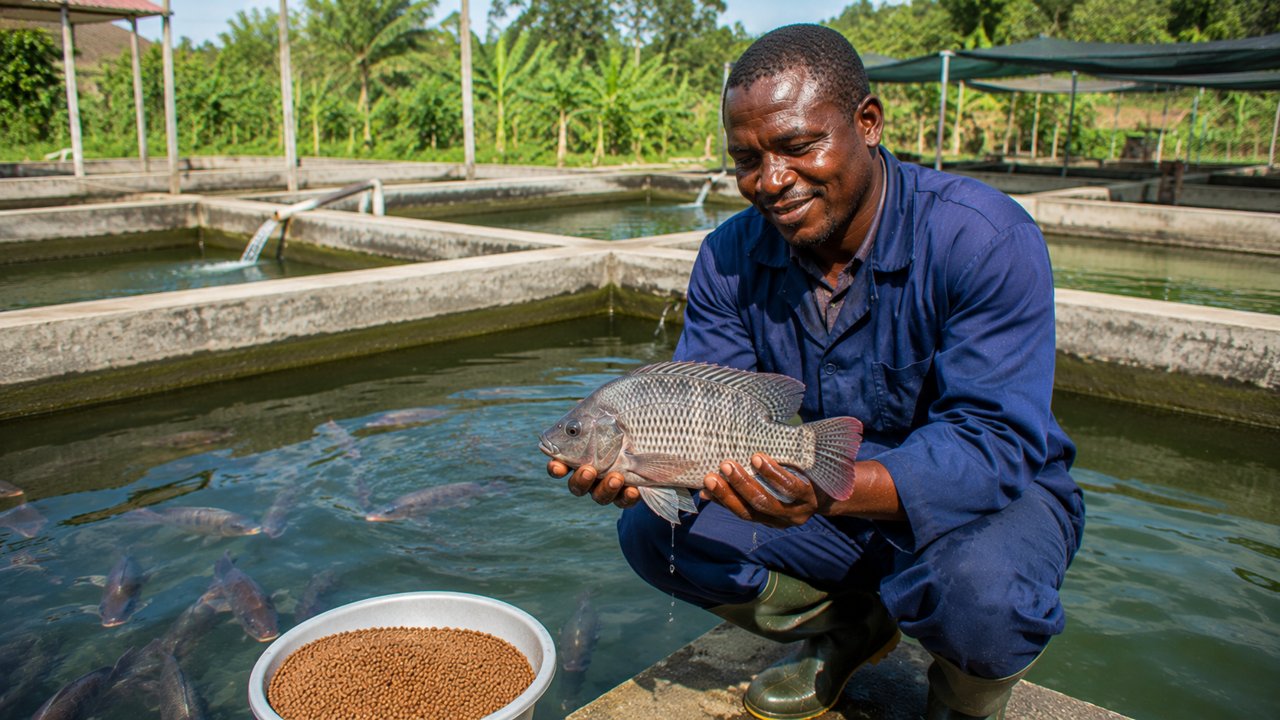
Earthen ponds are economical where land and water allow, reproducing a natural environment but requiring space and good water control. Above-ground tanks (tarpaulin or concrete) enable more intensive farming on a small footprint, with better control of density, feeding and water quality — often the ideal entry point.
Running the farm
Everything starts with quality fingerlings from reliable hatcheries; a good start conditions the whole cycle. Feed is the dominant cost: catfish is omnivorous and accepts floating pellets, and the right ration drives growth and feed conversion, hence margin. Even though catfish is resilient, clean, regularly renewed water reduces stress and disease. Watch the density: too many fish degrades water and slows growth.
Costs, market and profitability
Main charges are fingerlings, feed, water and tank construction. Profitability rests on a good survival rate and efficient growth. Fish sell live, fresh or smoked; smoked catfish in particular adds value and keeps longer. Planning cycles to deliver in high-demand periods optimises prices.
In summary
Catfish farming is one of the most promising gateways into Cameroonian aquaculture: a robust species, fast growth, a solid market and the option to start small. Success hinges on fingerling quality, feed and water management, and well-planned marketing.
Read more
Partager :

Discover more from Jangolo Blog
Subscribe to get the latest posts sent to your email.