Goat and Sheep Farming in Cameroon: A Small Ruminant Guide
Goat and sheep farming is deeply rooted in Cameroonian habits. In demand all year and especially during religious and family celebrations, small ruminants offer an accessible activity, light on start-up capital and well suited to family farms. Here is how to get started.
Why raise small ruminants
Goats and sheep need less investment than cattle, valorise low-cost forage and crop by-products, and breed quickly. Meat demand is strong and steady, peaking at celebrations. You can start with a few head and scale up — an excellent gateway into livestock farming.
Starting your flock
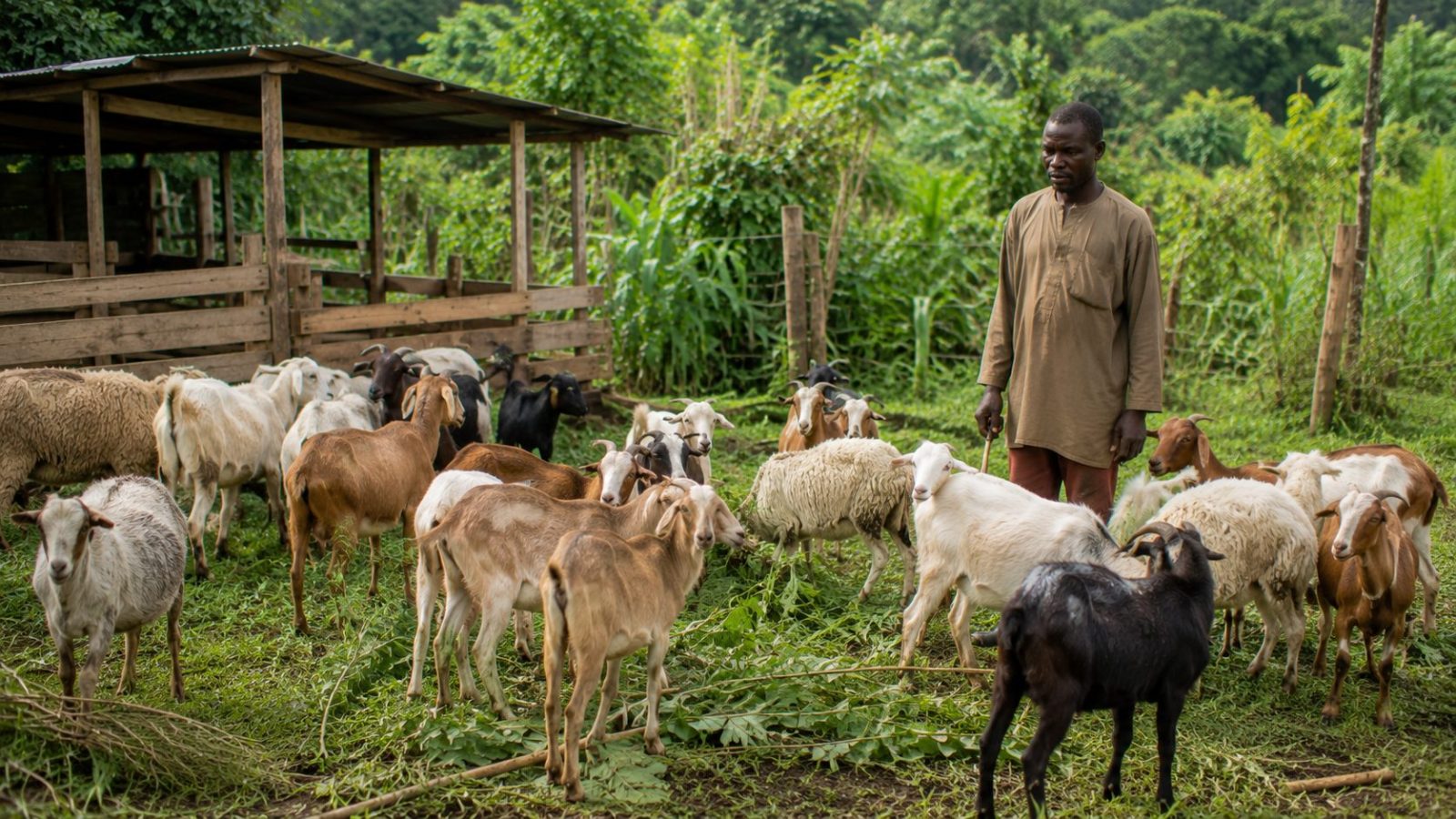
Buy healthy, lively, well-conformed breeders from reliable farmers; a good billy or ram durably improves the flock. A simple but well-built shelter protects animals from rain, sun and predators — dry, airy and easy to clean, with a raised or well-drained floor to limit hoof disease and parasites.
Feeding and management
Small ruminants valorise grass, forage, crop residues and supplements. A good feed balance, especially for pregnant and nursing females, drives growth and fertility; permanent access to clean water is essential. Success largely depends on prevention: regular deworming, vaccination as advised by a vet, and isolation of any sick animal. Well managed, reproduction allows several kiddings and fast flock growth.
Outlets and profitability
Small ruminants sell live to households, butchers and livestock markets, with strong valorisation at festivities. Margin depends on controlling mortality, feed cost and breeding pace. Planning sales around demand peaks clearly boosts income.
In summary
Goats and sheep make an accessible, low-barrier livestock activity with assured outlets. Good breeders, a healthy shelter, balanced feeding and — above all — rigorous sanitary prevention are the keys to profitable small ruminant farming.
Read more
Partager :

Discover more from Jangolo Blog
Subscribe to get the latest posts sent to your email.