Packaging and pricing: making your food product competitive
At equal quality, it’s often packaging and price that decide the sale. A well-presented product inspires trust and sells for more; a poorly calculated price loses you money or customers. Here’s how to work these two levers to make your food product truly competitive.
Packaging: your first salesperson
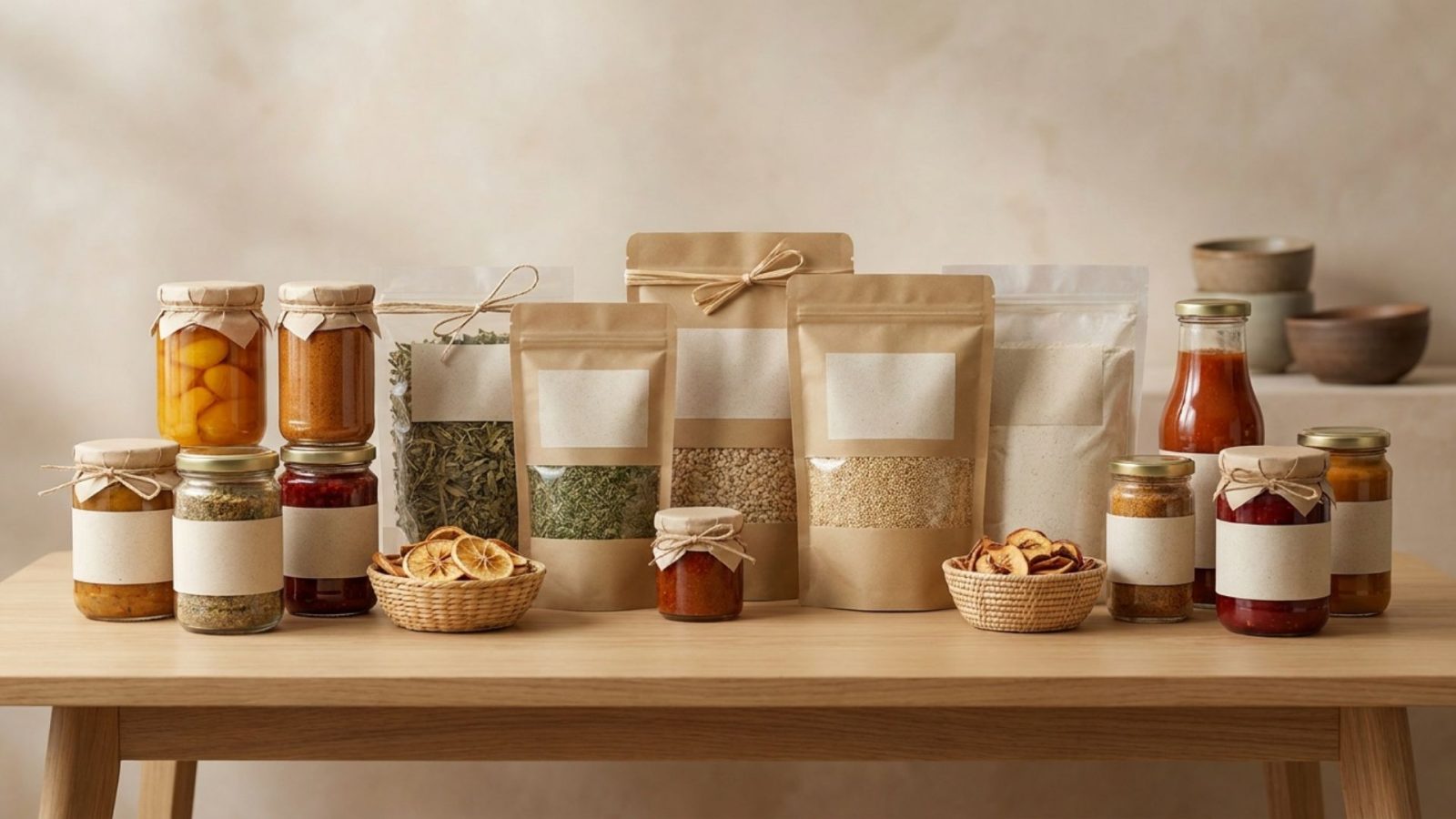
Packaging protects, informs and attracts. It must first protect the product (from field to shelf, without breakage or contamination), then build trust and stand out. The fundamentals:
- Suitable protection: sturdy, clean packaging designed for transport and storage (ventilated crates for fresh produce, airtight containers for dry goods).
- Clear, compliant labelling: product name, ingredients, net weight, dates, producer contact. Essential in supermarkets and mandatory for export.
- A visual identity: a logo, colours, a readable « origin » story. This turns an anonymous commodity into a memorable brand.
- The right format: offer packaging suited to your target (small retail format, large format for wholesalers).
Price: neither too high nor too low
Setting your price « by feel » is the classic mistake. A simple method:
- Calculate your full cost: inputs, labour, packaging, transport, losses, and your time. Everything must be covered.
- Add a margin that rewards your work and your risk.
- Compare to the market: position yourself against competitors — without slashing, because too low a price (wrongly) signals lower quality and destroys your margin.
- Justify the value: quality, consistency, packaging and an « origin » label let you sell for more without losing the customer.
Packaging + price: the winning duo
The two reinforce each other: careful packaging justifies a higher price; a coherent price protects the premium image the packaging creates. This duo opens supermarket shelves and export doors — where compliant packaging and labelling are non-negotiable.
Pitfalls to avoid
- Slashing prices to sell fast: you destroy your margin and devalue the product.
- Forgetting costs (transport, losses, your time): you sell at a loss without knowing it.
- Neglected packaging: even an excellent product stays on the shelf if it looks cheap.
- Non-compliant labelling: rejection in supermarkets, blockage at export.
Read also
Selling to supermarkets and buying centrals · Transport and logistics for perishables · Every channel for selling your farm produce
Frequently asked questions
How do I set my product’s price?
Start from full cost (everything included, your time and losses too), add a margin, then adjust for the market and perceived value. Don’t slash.
Do I need to invest a lot in packaging?
No: what matters is protection, clear labelling and a simple but careful identity. A few smart choices beat expensive packaging.
Does a low price attract more customers?
Not sustainably: too low a price suggests lower quality and ruins the margin. Better to justify value than to slash prices.
Going further
A good product, well packaged and well priced, sells better and for more. Work these levers, then showcase your products on Jangolo to reach the right buyers.
Partager :

Discover more from Jangolo Blog
Subscribe to get the latest posts sent to your email.