Why Food Promotions Have Become Essential in Cameroon
Disponible en français : Pourquoi les promotions alimentaires sont devenues essentielles au Cameroun
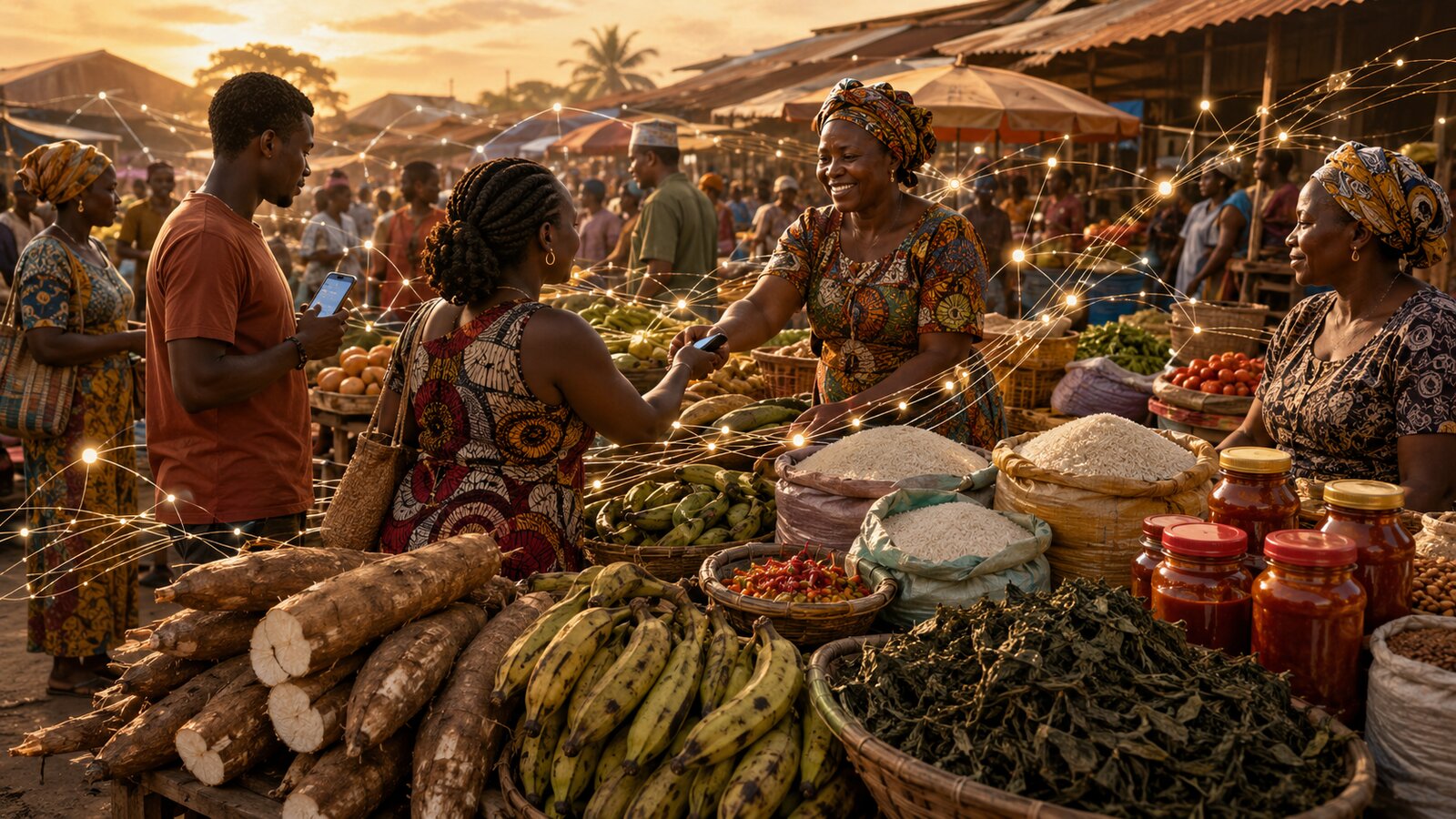
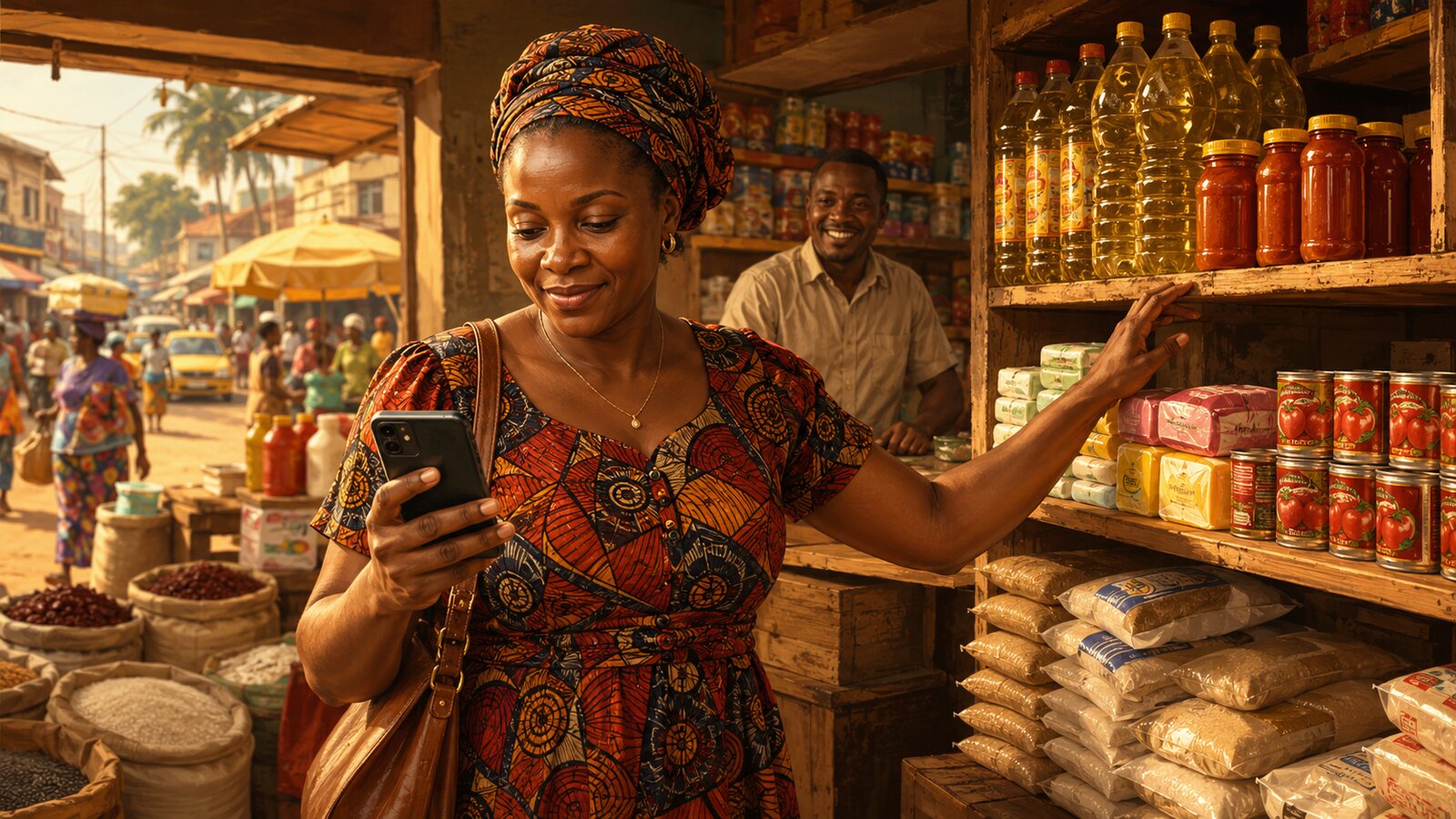
Mokolo market, Tuesday morning. A mother stops in front of the palm-oil bottles. She looks at the price, frowns. It has gone up again since last month. She walks a few steps to the rice sacks, mentally calculates what she still needs to buy this week — soap, milk, sugar, stock cubes. She comes back to the oil, hesitates, ends up reaching for a smaller bottle. It’s not that she doesn’t want the large one. It’s that she has no way to know where, in Yaoundé, she could find a better deal.
This scene plays out every day, in every market across Cameroon. And it tells us something important about what has broken in our daily relationship with food: good prices exist, but they aren’t reachable. Promotions exist, but they are only visible to those who happen to pass by at the right time, in the right place. For everyone else, they may as well not exist at all.
This article looks at that gap: why food promotions are no longer a bonus in Cameroon — why they have become a core piece of household budgeting, and why making them visible is starting to change how people shop.
The context: a food basket that weighs heavier every year
In Cameroon, food already represents between 40 and 60% of household spending. The lower the income, the higher the share. And for several years now, that weight has only been growing.
Post-pandemic food inflation, shocks on international supply chains, fuel price hikes that cascade onto transport, tensions around imported staples like wheat and rice — all of it has pushed prices up. A bottle of palm oil, a sack of rice, a kilo of sugar — each of these products costs noticeably more today than three years ago. Families feel it every time they reach the till.
On the seller’s side, you see the opposite problem, but linked: stocks that don’t move. Neighbourhood shops, agroindustries, supermarkets, importers — many have products sitting in their storerooms. A season is ending, a product hasn’t found its audience, an expiry date is approaching. These stocks they are ready to sell at a lower price — to keep things turning, to free up cashflow, to avoid outright loss.
On one side, consumers trying to pay less. On the other, sellers ready to drop their prices. Logically these two worlds should meet constantly. In practice they miss each other almost all the time.
The current problem: scattered promotions, ill-informed consumers
Why doesn’t this meeting happen? Because food promotions in Cameroon are today completely fragmented across channels that don’t talk to each other.
- Shop-front displays — an A4 sheet taped to the window, a sign at the entrance. Visible only to people walking past that day.
- WhatsApp statuses — many traders send their offers to their contacts. But a status disappears after 24 hours, and only the trader’s subscribers see it.
- Facebook and community groups — effective in certain neighbourhoods, but scattered. A promotion posted in one group is invisible to another.
- Word of mouth — still the most powerful channel, but also the slowest and most random.
For the consumer, the result is frustrating: finding a good deal takes serious effort. Going out, walking shop to shop, comparing in your head, remembering prices from one place to another. In real life, after a day’s work, with kids to pick up, nobody does that. You go to the nearest shop, you pay the marked price, and you forget that two streets away the same product was on offer.
For the seller, it’s just as frustrating: he has lowered his price, he has announced it on his usual channels, and yet his stocks turn barely faster. His promotion reaches the same 50 or 100 loyal customers. Beyond that, no one knows. The promotion exists, but it is invisible to the market.
What’s changing: the smartphone has become the first reflex
Ten years ago, this scatter problem had no obvious solution. Today it does, and it sits on a single observation: Cameroonians use their smartphones for everything.
To rent an apartment, people check listings sites. To book a motorbike-taxi, they open an app. To compare phone plans, they look at the operator websites. To pick a restaurant, they read reviews. To buy a second-hand phone, they search online. This habit of « check before you buy » has become automatic — and it is gradually extending to food.
When a consumer builds the habit of checking her phone before heading to the market, several things shift in cascade:
- She discovers offers she would have missed. A 20% promotion on cooking oil in a shop she had never visited, but which is 800 metres from home.
- She compares before going out. She knows what price to leave home for, which changes her shopping strategy.
- She plans her shopping differently. Instead of buying everything at the same place out of habit, she combines two or three outlets depending on the offers of the week.
- She starts knowing prices. A rare skill in food shopping, long reserved for professional buyers.
On the seller’s side, the flip is just as deep. A shop that publishes its promotion on a shared platform no longer depends on its 100 WhatsApp subscribers — it becomes discoverable by everyone in the neighbourhood searching for the product. The promotion stops being an expense to retain regulars; it becomes an investment to acquire new customers.
Jangolo Promotions’ role: centralise and make visible
This is exactly the work Jangolo Promotions takes on: pick up the food offers that already exist in Cameroon — scattered across shop fronts, WhatsApp statuses, Facebook groups, handwritten posters — and bring them together in a single place anyone can consult.
Three simple functions, but structurally important:
- Centralise. All active promotions in the same place, sorted by category, location, end date. No more juggling five apps and three Facebook groups.
- Make visible. An offer published on Jangolo Promotions becomes discoverable by every consumer searching for the product — not just the seller’s personal contacts. A shop in Akwa can be found by a buyer in Bonamoussadi.
- Connect without intermediaries. The buyer sees the offer, sees the shop, sees the location. He decides. No reseller, no added margin, no middleman stretching the chain.
Today the platform hosts its first offers — a few products, a few sellers. The modesty is deliberate: we lay the infrastructure and let it grow with those who want to take part. But the principle is already there, and it is powerful — because it rests on an observable fact: Cameroonians have already adopted the reflex of searching before buying. There was just no dedicated place for food to do it.
What this changes, beyond the discounts
If we stop at « seeing the promotions, » we miss the bigger picture. A visibility infrastructure for food prices, at the scale of a city like Yaoundé or Douala, gradually changes several things you don’t notice straight away:
- More local consumption. When a Cameroonian product on promotion becomes as visible as an imported one, the consumer has a real choice. Local becomes competitive because it is seen.
- Less food waste. A shop with a short-expiry stock can flag it. Instead of ending in the bin, the product moves. Multiplied across thousands of shops, that’s tonnes of food saved every year.
- More price transparency. When every promotion’s price is visible, gaps between neighbourhoods, retailers, and brands become obvious. The market rebalances naturally.
- A new relationship between trade and consumer. The trader stops chasing the customer — the customer comes to the offer. For local commerce, that’s a model shift, in the right direction.
What we call « food promotions » is becoming, without us always saying it out loud, an infrastructure of purchasing power. A mechanism that works, at scale, on a family’s ability to eat properly on what they earn.
Concretely, what’s the next step?
If you are a consumer, the invitation is simple: before your next shop, take a few seconds to look at the active offers on Jangolo Promotions. If you find a deal on oil, rice, sugar or soap — products you buy regularly — the monthly saving becomes real.
If you are a shopkeeper, processor, or agroindustry, the invitation is just as simple: publish your first offers. It is free, it takes a few minutes, and it is building a visibility channel that did not exist before. The earlier you join, the earlier you reap the audience benefits.
The mother at Mokolo market doesn’t need to understand all of this. She just needs to know, in a few seconds on her phone, where to buy her oil at the best price this week. That’s the simple promise — and it’s the one that, multiplied across millions of baskets, is starting to reshape food commerce in Cameroon.
More in the series
- Article 1 — African Food Commerce Has a Visibility Problem — Here’s How Data Will Change It
- Article 3 — How to find the best food promotions near you (coming)
- Article 5 — Why promotions are a strategic tool for agroindustries (coming)
Share this content:
Partager :

En savoir plus sur
Subscribe to get the latest posts sent to your email.