Kondrè with Beef: The Soul of West Cameroon in One Pot
Available in French: Le Kondrè à la viande de bœuf : l’âme de l’Ouest-Cameroun dans une cocotte
In a kitchen perched in the highlands of West Cameroon, Kondrè always begins with a small ritual: the cook picks through the plantains, testing for firmness, rejecting any that have begun to ripen. There’s no room for compromise here — this dish demands the plantain green, firm, ready to soak up a spiced broth without falling apart. From that first choice, everything else follows.
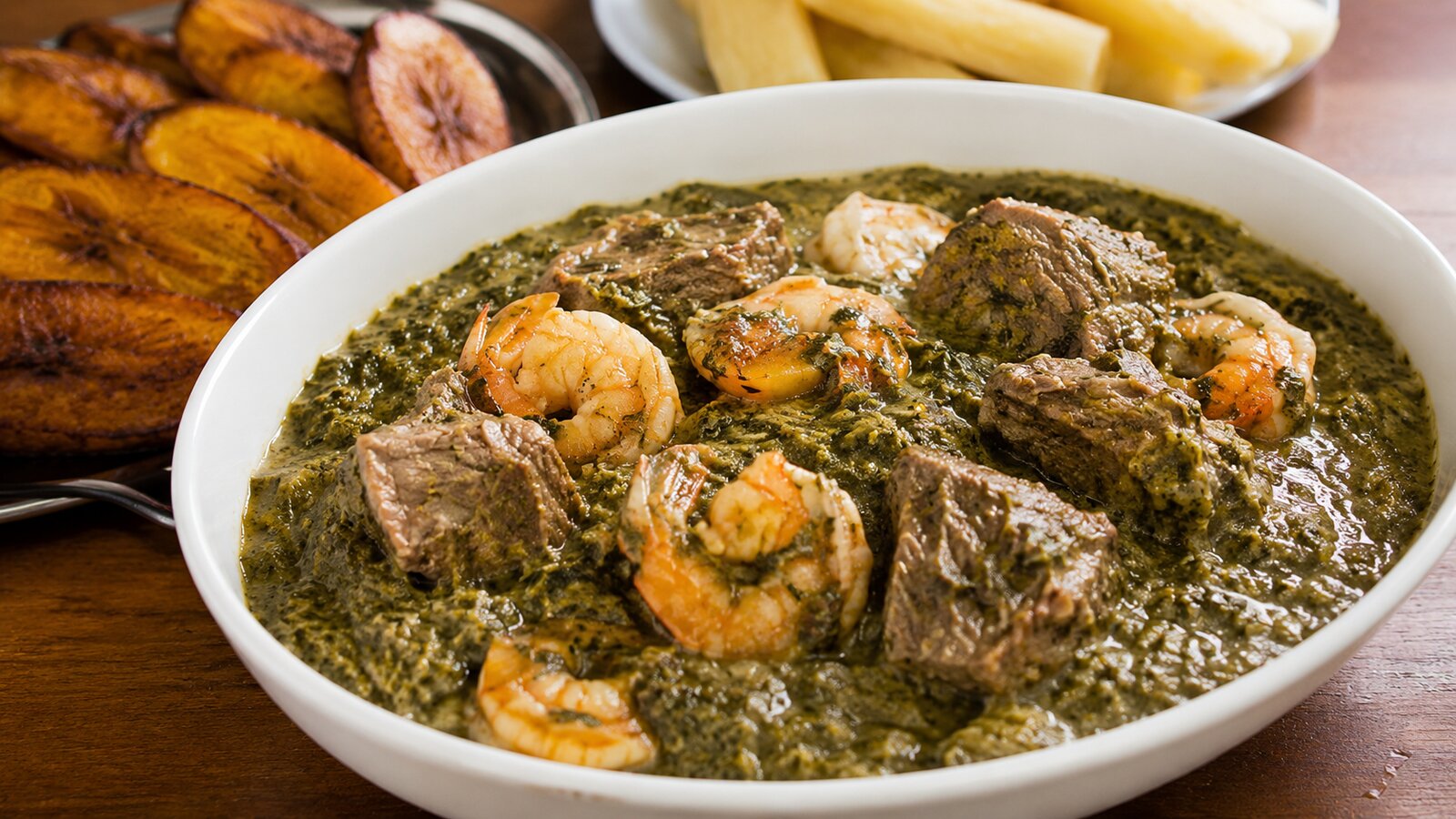
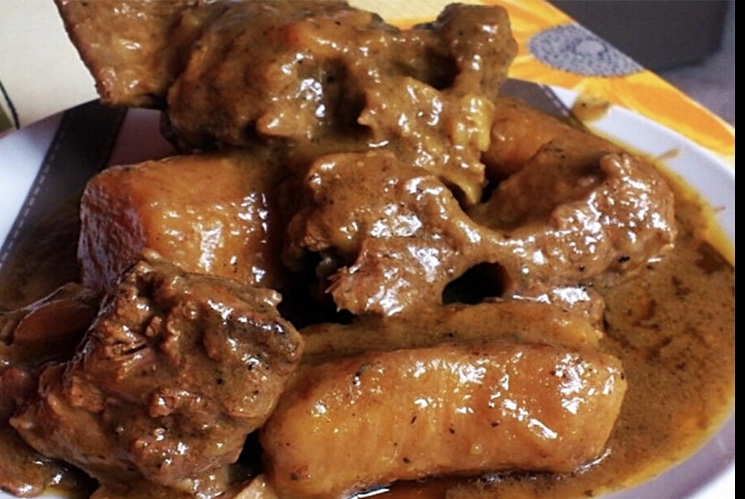
Kondrè with beef is one of the most beloved dishes of Cameroonian cuisine. Traditionally prepared with goat meat, it reinvents itself with beef for those who prefer a milder flavor. But whichever meat is used, the soul of the dish remains: a slow encounter between meat, green plantain and the traditional spices of the West region.
Kondrè at a glance
| Origin | Highlands of West Cameroon (Bamileke cuisine) |
| Type | Slow-simmered main course |
| Total time | About 65 minutes |
| Serves | 4 people |
| Difficulty | Accessible (slow-simmering technique) |
| Indicative cost | Modest to moderate, depending on cut of beef |
The story: a dish that tells the story of West Cameroon
Kondrè (also spelled Condè or Kondre) has its roots in the cooking traditions of the Bamileke, the dominant community of Cameroon’s West and Northwest regions. It is fundamentally a gathering dish: prepared when family expands for the weekend, when a son or daughter returns to the village, or when an occasion calls for something more than an ordinary meal.
Its traditional version uses goat meat, whose pronounced character marries perfectly with the spices. The beef variant is more recent — the one you’ll find in cities, in restaurants, in kitchens where the strong smell of goat is unwelcome. The two versions coexist in parallel today, and many families serve one or the other depending on the mood of the day.
What sets Kondrè apart from other African slow-simmered dishes is the use of green plantain not as a side dish, but as a central ingredient cooked into the pot. The plantain absorbs the broth, takes on the amber color of the spices, and releases a dense sweetness that contrasts with the richness of the meat. This plantain-meat dialogue is what defines the dish.
The signature ingredients of Kondrè
Kondrè leans on a few specifically Cameroonian ingredients that are irreplaceable — and worth paying attention to when shopping.
Green (unripe) plantain
Choose plantains that are still green-skinned or just beginning to yellow, firm to the touch. An overripe plantain will turn to mush during the 45-minute simmer — this is Kondrè’s number-one mistake. A good plantain holds its shape after cooking while absorbing the broth.
White Penja pepper
Grown in the Penja valley of Cameroon’s Littoral region, this is the only African pepper holding a Protected Geographical Indication (PGI) — a national point of pride. Its floral aroma and measured intensity make a significant difference compared to a generic black pepper. If you invest in one specific ingredient for your Kondrè, make it this one.
Djanssan and rondelle moulu
Djanssan (Xylopia aethiopica), sometimes called « Guinea pepper, » and rondelle moulu (njansang / akpi, from the Ricinodendron heudelotii tree) are two forest spices of Central Africa that give Kondrè its signature aromatic depth. Find them in the traditional spice sections of African markets or at specialist suppliers.
The full list of 14 ingredients with precise quantities is available on the official Jangolo recipe page, with a total cost estimate calculated from real-time market prices.
When to serve Kondrè
Kondrè is not an everyday dish — it asks for time, attention, and several people gathered at the table. Here’s when it makes the most sense:
- Sunday lunch with family — when everyone is gathered, without time pressure
- Reunions — welcoming a relative back to the village, hosting visitors
- Bamileke celebrations — funerals, dowries, traditional ceremonies
- Cool evenings during the dry season — the slow-simmered, rich, spiced character warms the heart
Served hot, with no accompaniment — the plantain fills that role — in shallow bowls that leave room for the broth.
3 common mistakes to avoid
1. Choosing overripe plantain
Already mentioned, but it’s the most common error. If all the plantains at the market are yellow or spotted, it’s better to wait for another delivery than to compromise the dish. Kondrè demands firm green plantain — this is non-negotiable.
2. Skipping the vinegar wash for the meat
Before any cooking begins, the meat should be washed with vinegared water. This step removes residual odors and prepares the meat to absorb the spices. Skipping this gives a flat, heavy dish even with the best ingredients.
3. Rushing the cooking
Kondrè cannot be rushed. After searing the meat and adding the plantain, cooking must be done at low heat, covered, for nearly an hour. Slow simmering is what lets the spices penetrate the meat and the plantain. Raising the heat to save time gives you firm-cored plantain and rubbery meat.
A grandmother’s tip: let the dish rest 10 minutes covered after cooking. The broth keeps being absorbed and the flavors balance.
The full recipe, step by step
Ready to cook? The detailed list of 14 ingredients, the quantities for 4 servings, the step-by-step cooking instructions and the total cost estimate are on the official Jangolo recipe page:
👉 See the full Kondrè with Beef recipe on jangolo.cm →
You can also explore the traditional Kondrè with goat meat (190 minutes, 8 servings) for the original version.
More Cameroonian recipes to discover
- The complete library of 141 African recipes on Jangolo
- Water fufu & Eru, another iconic Cameroonian dish
- Roasted chicken gizzards, traditionally reserved for the head of the family
Cooking Kondrè your own way? Join the Jangolo community and share your recipe with other Cameroonian cuisine lovers →
No time to cook? Find a restaurant
Want to enjoy this dish without cooking — or, if you run a restaurant or catering service, want to offer it to more customers? Discover the restaurants and caterers listed on Jangolo.
Partager :

Discover more from Jangolo Blog
Subscribe to get the latest posts sent to your email.