Understanding the Agribusiness Value Chain: The Key to Profitable Agriculture
This is post 5 of a 6-part series on agricultural market prices and the digital infrastructure transforming African agribusiness. Post 1 · Post 2 · Post 3 · Post 4.
Agriculture is often perceived as a single activity: producing food. In reality, agriculture is part of a much larger system known as the agribusiness value chain. Understanding this chain is essential for anyone who wants to build a successful agricultural business.
What is an agribusiness value chain?
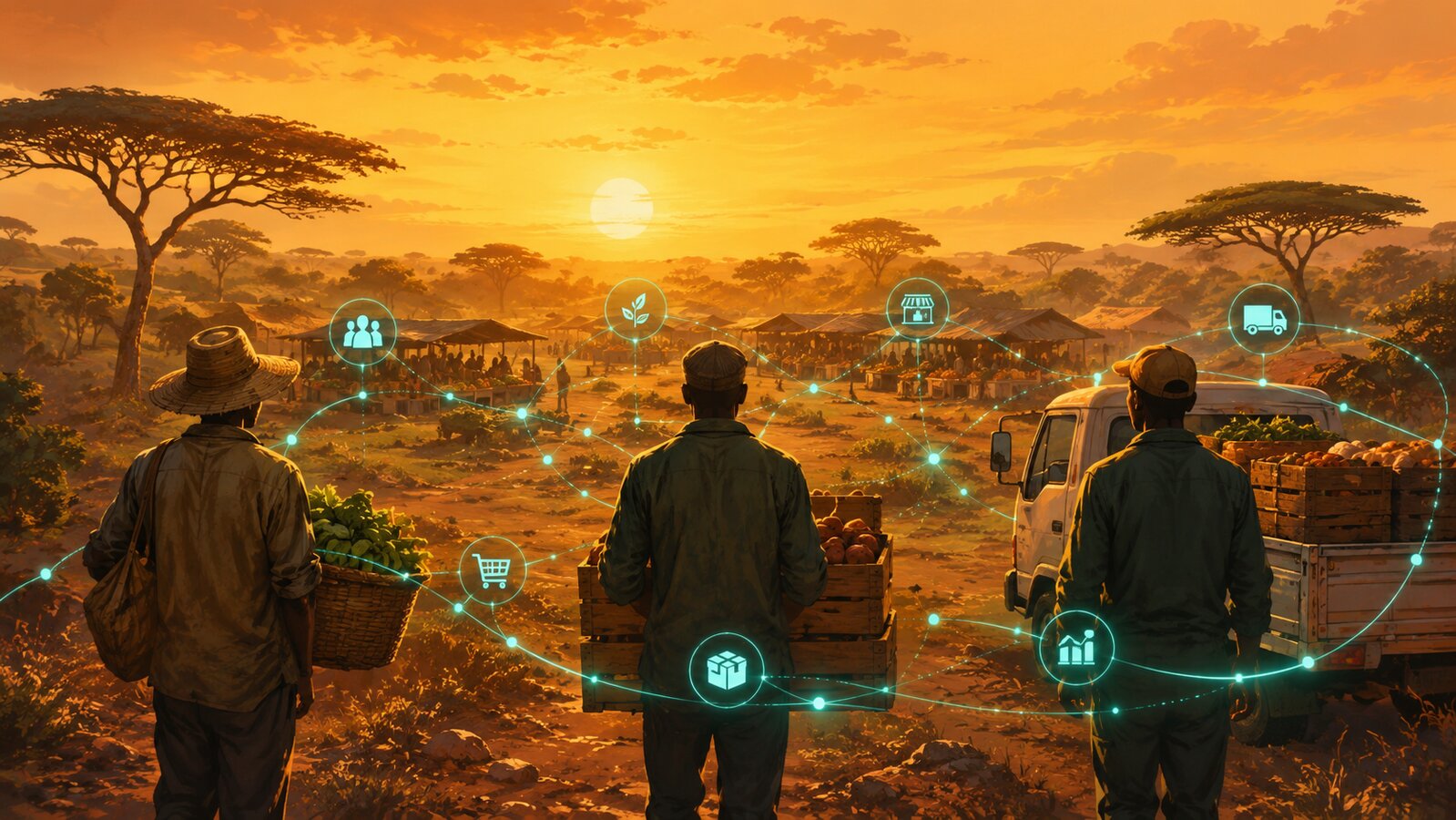
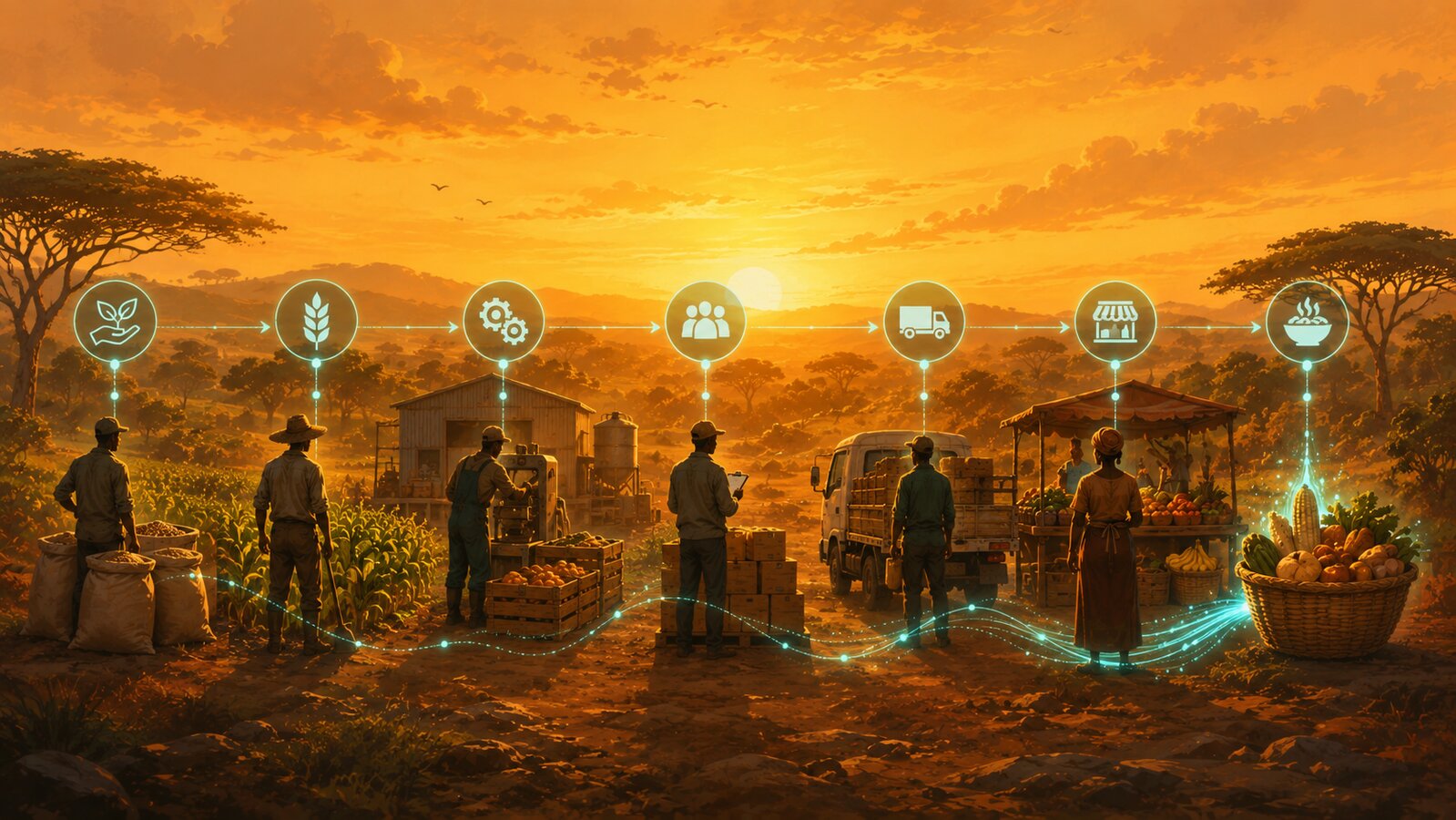
A value chain represents all the activities required to move a product from production to the final consumer. In agribusiness, this chain typically includes seven key actors:
- Input suppliers — seeds, fertilizers, equipment
- Farmers — producing the raw goods
- Processors — turning raw goods into ready-to-sell products
- Traders — moving products between markets
- Distributors — handling logistics at scale
- Retailers — selling to end customers
- Consumers — the demand that pulls everything forward
Each actor contributes value as the product moves along the chain.
Why value chains matter
Agricultural profitability does not only depend on production. It depends on how effectively the entire chain functions.
When value chains are well organized:
- products reach markets faster
- losses are reduced
- prices become more stable
- business opportunities increase
When value chains are fragmented, inefficiencies appear: products may remain unsold, transportation costs increase, and producers capture only a small share of the final value.
The importance of coordination
Successful agribusiness ecosystems depend on coordination between stakeholders:
- Farmers need reliable input suppliers.
- Processors need consistent raw material supply.
- Distributors need efficient logistics.
- Retailers need predictable delivery.
When these actors collaborate effectively, the entire chain becomes more productive.
Digital tools for value chain coordination
Digital platforms can play an important role in connecting value chain actors. They help stakeholders discover each other, share information, and coordinate activities — creating a more structured and efficient market environment.
Building stronger agribusiness ecosystems
Jangolo aims to support the entire agribusiness value chain by providing tools that connect stakeholders, share market information, and facilitate commercial exchanges. By strengthening the connections between actors, platforms like Jangolo help transform agriculture into a more organized and profitable sector.
Because in agribusiness, success rarely happens in isolation. It happens when the entire chain works together.
Continue the series
Up next: How Jangolo Connects the Entire Agribusiness Value Chain. The final post in the series brings the pieces together — market prices, trades, and value chain visibility — into a single connected ecosystem.
Want to position your agribusiness across the value chain? Join the Jangolo community and connect with stakeholders at every level. Get started on jangolo.cm →
Share this content:
Partager :

En savoir plus sur
Subscribe to get the latest posts sent to your email.