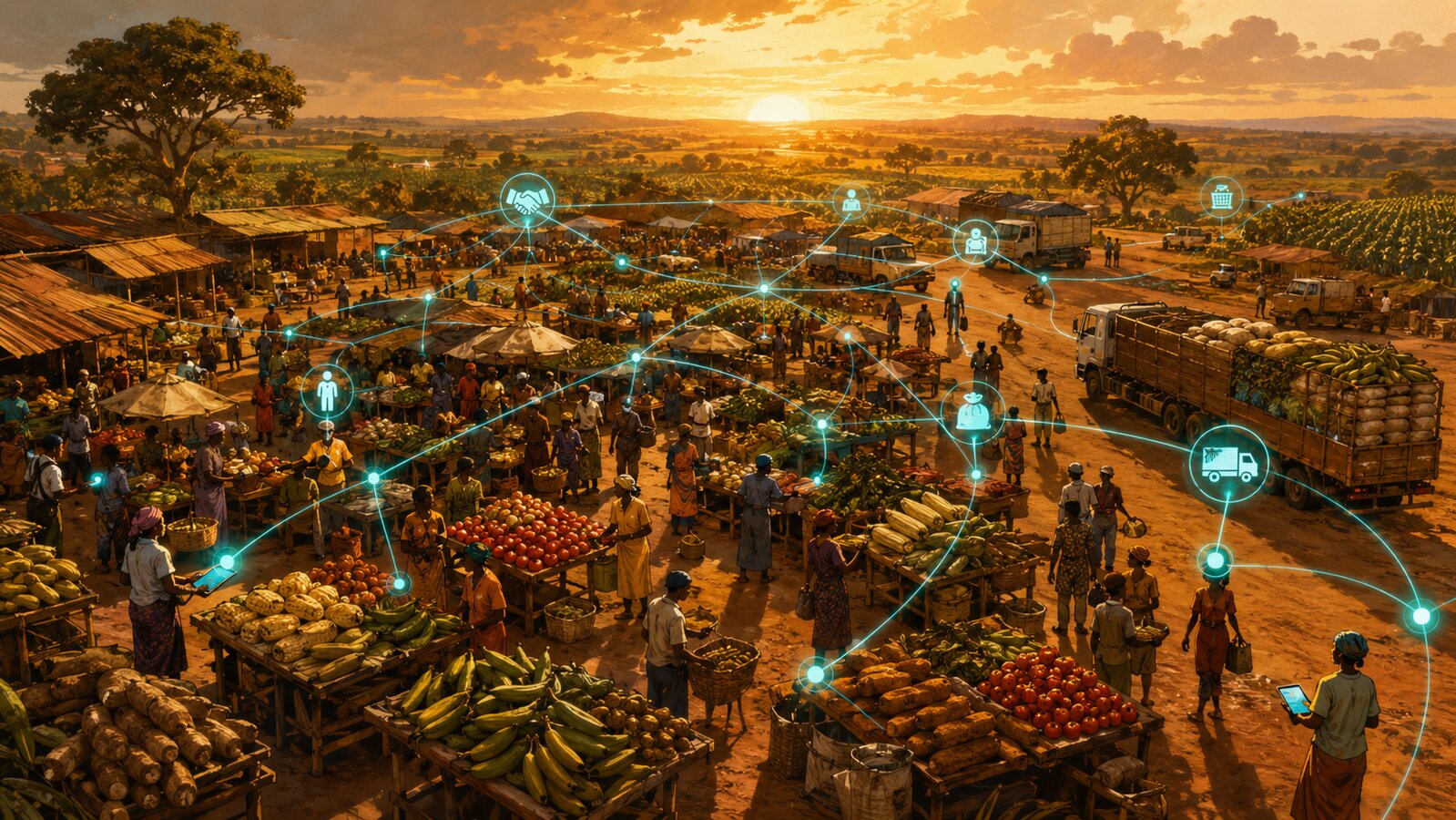
Agricultural Trading Is Broken — Here Is How Digital Platforms Fix It
This is post 3 of a 6-part series on agricultural market prices and the digital infrastructure transforming African agribusiness. Post 1 · Post 2.
Producing food is only half of the challenge in African agriculture. The other half is finding buyers. Across many countries, farmers struggle to access reliable markets, traders rely on personal networks, and buyers spend hours searching for suppliers. The result is a fragmented trading environment where, despite the enormous potential of agricultural markets, the connections between supply and demand remain inefficient.
The limits of traditional trading networks
Agricultural trading has historically relied on informal networks:
- Farmers sell to local traders.
- Traders rely on known contacts.
- Buyers often work within closed circles.
These networks can work at small scale, but they often limit growth. Producers may never reach larger buyers; buyers may struggle to discover new suppliers; opportunities remain hidden simply because people are not connected.
The cost of limited market access
When producers cannot access larger markets, several problems cascade through the value chain:
- Products may remain unsold.
- Prices stay artificially low.
- Middlemen capture most of the value.
- Small producers remain disconnected from national and international demand.
The real challenge is not production capacity. It is market access.
Digital platforms change the equation
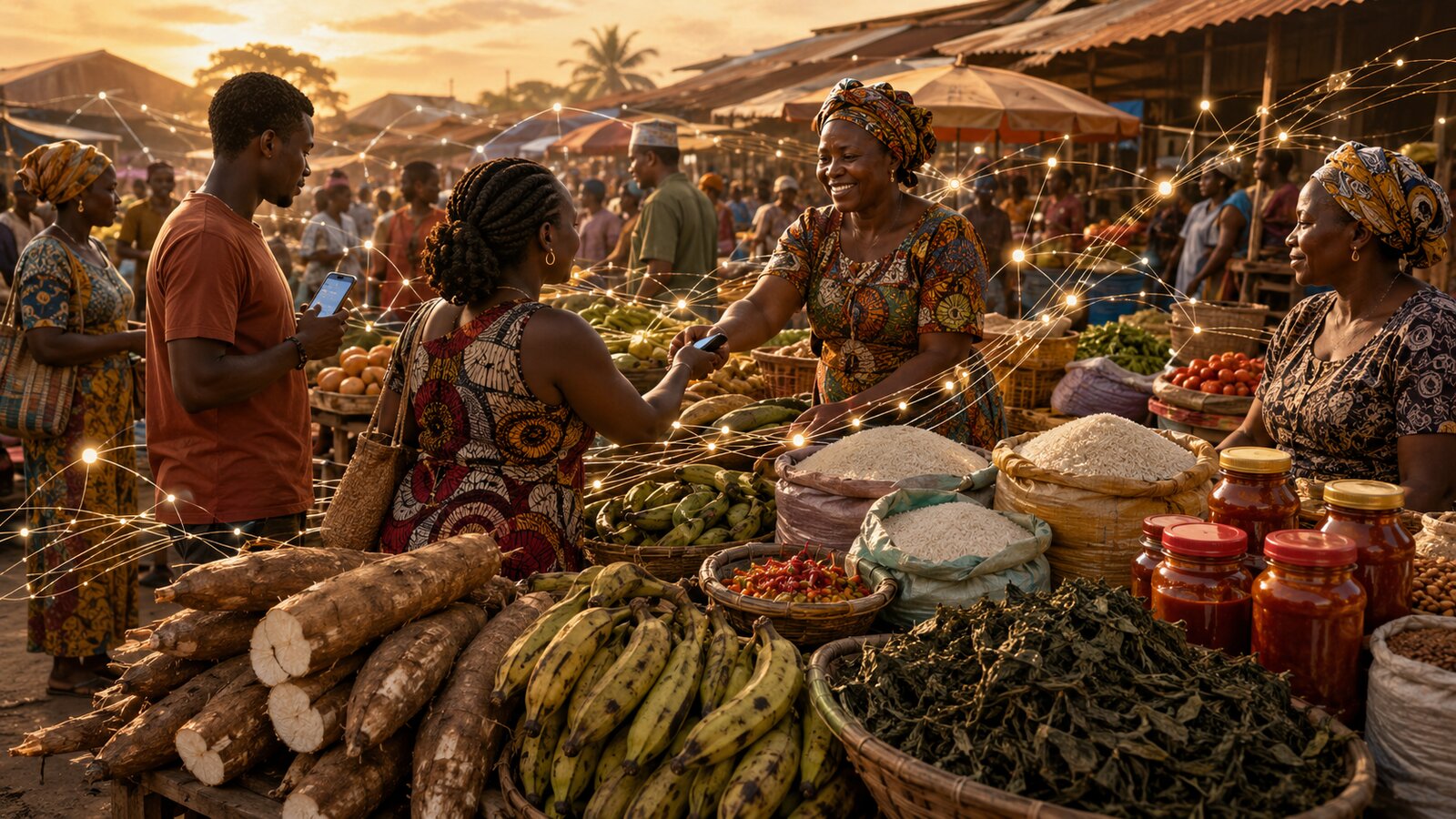
Digital trading platforms create a new environment where supply and demand can meet more efficiently. Instead of relying only on personal networks, stakeholders publish their offers and demands on a shared platform — dramatically increasing visibility:
- Buyers can discover new suppliers.
- Producers can reach new markets.
- Distributors can identify new opportunities.
Jangolo Trade: connecting supply and demand
The Jangolo Trade feature is designed to facilitate wholesale agricultural trading. Stakeholders can publish trade requests for products they want to sell or buy, creating a structured environment where agribusiness professionals discover opportunities beyond their immediate networks.
The goal is simple: make it easier for supply and demand to meet.
Expanding opportunities across the ecosystem
When trading opportunities become visible, the entire ecosystem benefits:
- Farmers gain access to new buyers.
- Traders discover new supply sources.
- Processors find reliable partners.
- Exporters identify new opportunities.
Digital trading platforms help transform fragmented agricultural markets into more connected and dynamic systems.
Building the future of agricultural commerce
Agriculture is entering a new era where digital tools are essential. Platforms that connect stakeholders, facilitate trading, and increase transparency will play a critical role in the modernization of agribusiness, and Jangolo Trade is part of that transformation.
Because in modern agriculture, success does not only depend on what you produce. It depends on who you can reach.
Continue the series
Up next: How Jangolo Trade Connects Producers, Buyers and Distributors. A closer look at the mechanics of how a digital trading platform actually moves products and money across the agricultural value chain.
Note: to close your deals safely, Jangolo offers escrow-secured payment (in French) — and the membership card cuts its commissions by 20%.
Want to publish your first trade request? Join the Jangolo community and connect directly with buyers, suppliers, and distributors across the agricultural value chain. Get started on jangolo.cm/trades and follow our guide: How to Sell with Jangolo Trade →
Partager :

Discover more from Jangolo Blog
Subscribe to get the latest posts sent to your email.