Koki beans: the Cameroonian steamed black-eyed pea cake
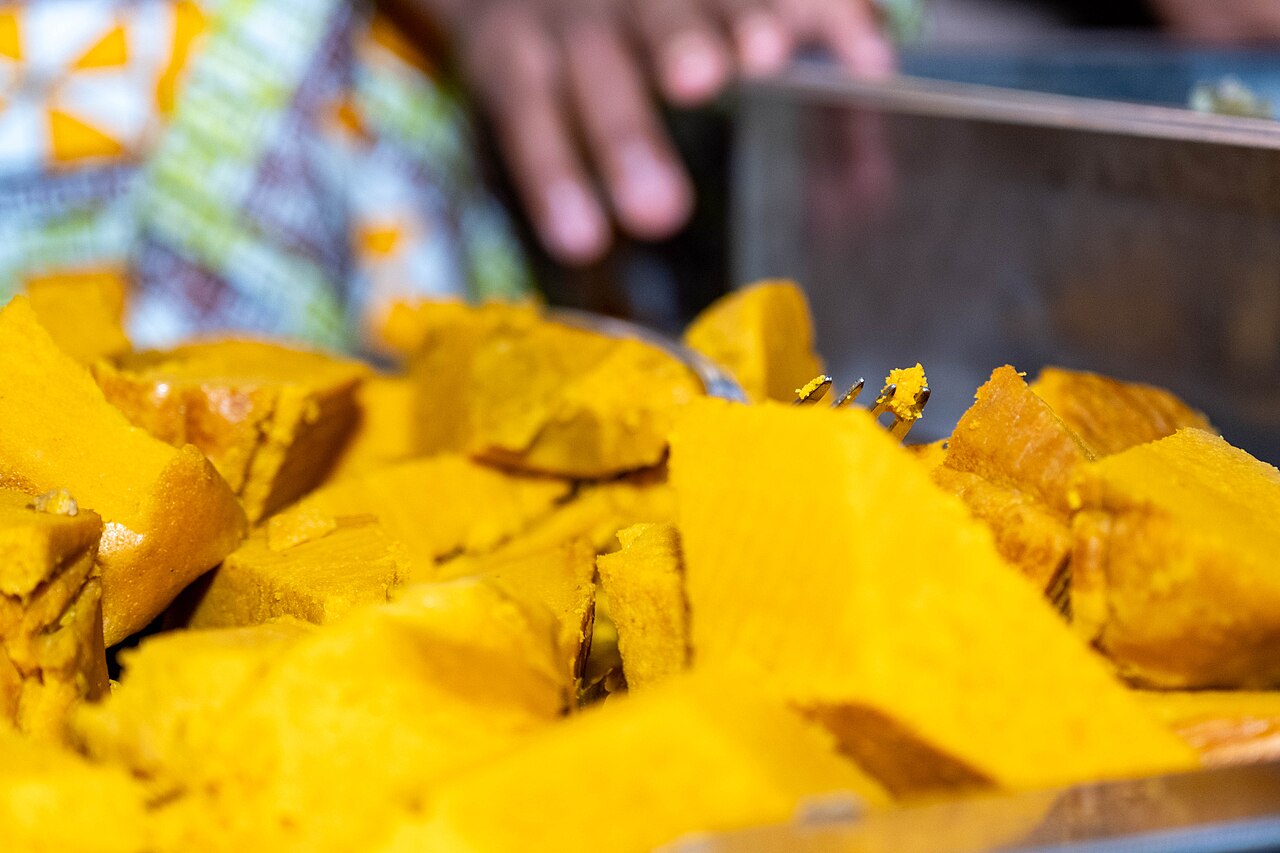
Koki (or koki beans) is one of Cameroon’s oldest and best-loved dishes: a soft cake of cowpeas (black-eyed peas) whipped with red palm oil and steamed in banana leaves. A Sunday dish, a celebration dish, a dish of memory — here is the authentic recipe, its variations and everything you need to get it right.
A dish of Cameroonian heritage
Koki is more than a recipe: it’s a legacy. It is even recognised among the 111 elements of Cameroon’s national intangible cultural heritage (decree of February 2021). You’ll find it among the Mbo of the Moungo, in Bazou and Bafang in the West, and among the Makaa, Bassa and Banen — each region with its own way of preparing and serving it.
Why it’s also a “healthy” dish
Beyond taste, koki is a concentrate of nutritional good sense. Cowpeas are rich in plant protein (around 24%), fibre and iron. Made without meat, koki is naturally vegetarian, even vegan — an accessible, affordable protein source, perfect to balance a plantain- or cassava-based meal.
Ingredients (serves 6)
- 500 g cowpeas (black-eyed peas)
- 25 cl warmed red palm oil
- 1 to 2 chillies (to taste), salt
- Banana leaves passed over a flame (or aluminium foil as a fallback)
- “Koki” leaves (tender taro) or spinach, optional depending on the region
Method (2 h, including 1 h 15 steaming)
- The cowpeas: soak for 1 h, then rub between your hands to remove all the skins (the water carries the husks away). This is the step that makes koki soft.
- The batter: blend the drained cowpeas with very little water into a foamy paste. Whisk it vigorously: the more air it holds, the more the koki rises.
- The oil: whisk in the warm red palm oil in a thin stream, season with salt, add the crushed chilli. The batter takes on a lovely orange colour.
- Wrapping: spoon portions of batter into the banana leaves and fold into tightly sealed parcels.
- Cooking: steam for 1 h 15 in a pot lined with stalks (the parcels must not touch the water). The koki is ready when firm and slices cleanly.
Grandmother’s tips
- A batter that’s too runny won’t set: the blended cowpeas should stay thick, almost mousse-like.
- The palm oil must be warm (never boiling) to keep its colour and flavour.
- Serve with boiled ripe plantain or cassava sticks.
Variations of koki
Koki changes from one region and family to another:
- Classic cowpea koki — the version in this recipe.
- Leaf koki (tender taro/cocoyam leaves) — richer and greener.
- Corn koki — made with fresh maize.
- Street-food koki — smaller parcels, quickly steamed.
Storage
Koki keeps 2 to 3 days in the fridge in its leaves, and freezes very well (up to 2-3 months) — handy for the diaspora. Reheat by steaming or in a pan; avoid the microwave, which dries it out.
Frequently asked questions
What’s the difference between koki and moin-moin?
Nigerian moin-moin is a cousin of koki, but Cameroonian koki stands out for its generous red palm oil and the banana-leaf cooking that perfumes the cake.
Is koki vegetarian?
Yes: in its traditional version it contains only cowpeas, palm oil, salt and chilli. It’s a vegetarian and vegan dish, rich in protein.
Can I use cowpea flour?
Yes, in a pinch — but the result is less soft than with fresh soaked and peeled cowpeas.
No time to cook? Find a restaurant
Want to enjoy this dish without cooking — or, if you run a restaurant or catering service, want to offer it to more customers? Discover the restaurants and caterers listed on Jangolo.
Read also
Ndolé with shrimp and beef · Kondrè with beef
Partager :

Discover more from Jangolo Blog
Subscribe to get the latest posts sent to your email.