Cameroon’s Rice Value Chain: Opportunities, Challenges, and Solutions
Available in French: La chaîne de valeur du riz au Cameroun : opportunités, défis et solutions
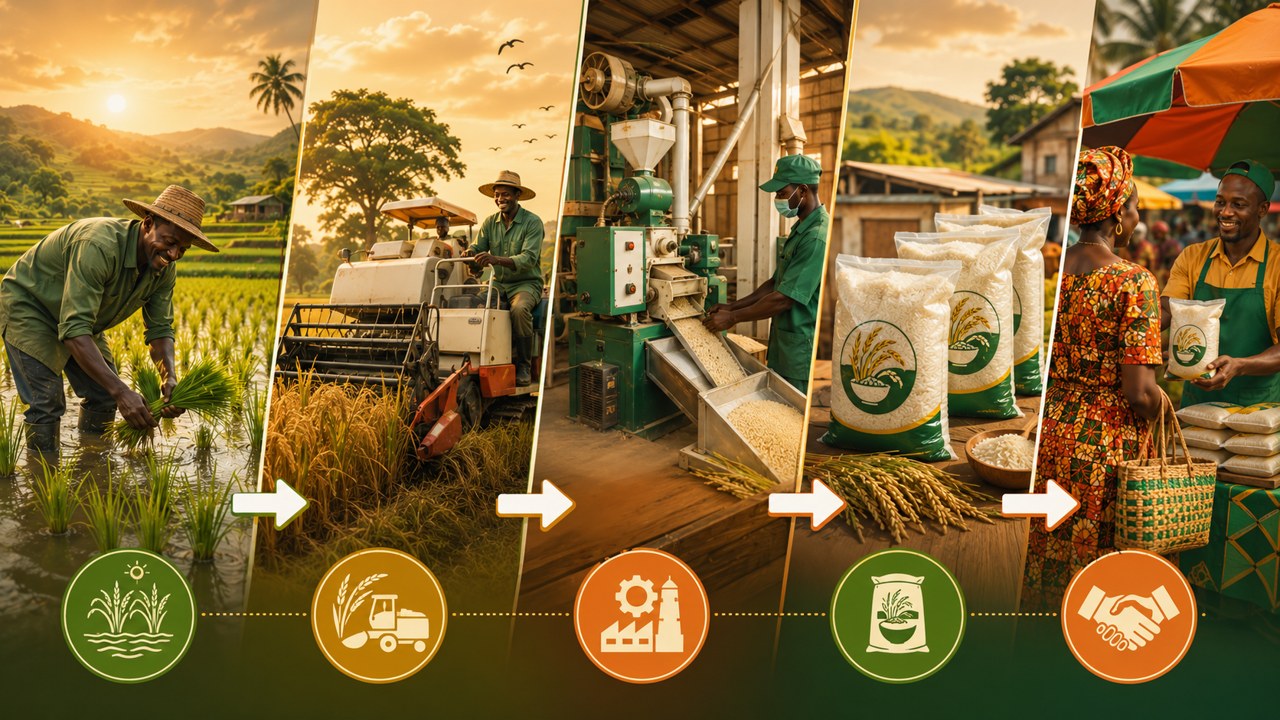
Rice is a staple food for millions of people worldwide, and its importance cannot be overstated. In Cameroon, the rice value chain plays a crucial role in food security and economic development. This article explores the importance of this chain, the challenges it faces, concrete suggestions to improve it, and how an agribusiness infrastructure like Jangolo can accelerate its growth.
1. A Deficit Market: Why Local Rice Represents a Massive Opportunity
Rice is a vital element of the Cameroonian diet, with consumption steadily increasing over the years. Domestic consumption far exceeds local production, leading to significant import dependency. According to the Ministry of Agriculture and Rural Development (MINADER), Cameroon imports approximately 700,000 to 800,000 metric tons of rice per year to meet demand estimated at over one million metric tons annually.
This dependence creates a substantial market opportunity for local producers. Increasing local production would:
- reduce import dependence and currency outflow
- improve national food security
- create rural jobs across the entire chain
- boost economic development in producing regions
2. Structural Challenges of the Local Value Chain
Despite the potential, Cameroon’s rice value chain faces several structural obstacles:
- Low productivity — traditional farming methods, limited access to improved seeds and minimal use of modern technologies result in low yields.
- Failing infrastructure — inadequate transportation networks, lack of storage facilities and inefficient milling processes cause significant post-harvest losses.
- Limited access to financing — smallholder farmers struggle to obtain credit to buy inputs, invest in equipment, and develop their operations.
- Market access — lack of price information, weak buyer connections, and dominance of intermediaries who capture most of the value. (This is the focus of our 6-part series on market prices as missing infrastructure.)
- Environmental challenges — unpredictable weather patterns, soil degradation, and water scarcity affect production.
3. Levers to Improve the Value Chain
To address these challenges and grow Cameroon’s rice value chain, several levers can be activated:
- Adopt modern farming techniques — encourage use of improved seeds, suitable fertilizers, and modern cultivation practices to increase productivity. Providing training and extension services to farmers facilitates this transition.
- Improve infrastructure — invest in better transportation networks, modern storage facilities, and efficient milling technologies to reduce post-harvest losses and improve quality.
- Improve access to financing — develop financial products tailored to smallholder needs: microcredit, agricultural insurance, seasonal credit.
- Strengthen market connections — build platforms that connect farmers directly with buyers, processors, and consumers, reducing dependence on intermediaries and ensuring fair prices. (See how digital platforms fix broken agricultural trading.)
- Promote sustainable practices — encourage practices that preserve soil and water, support climate-resilient agricultural techniques to mitigate environmental challenges.
4. The Role of Consumers
Consumers also play a crucial role in transforming the rice value chain:
- Support local production by preferring rice grown in Cameroon over imported varieties — this simple purchasing choice grows demand for local products.
- Advocate for favorable policies for the local value chain and participate in initiatives that promote local rice consumption.
- Provide constructive feedback to producers and processors to help improve the quality, presentation, and variety of locally produced rice.
5. How Jangolo Can Help This Value Chain Grow Quickly
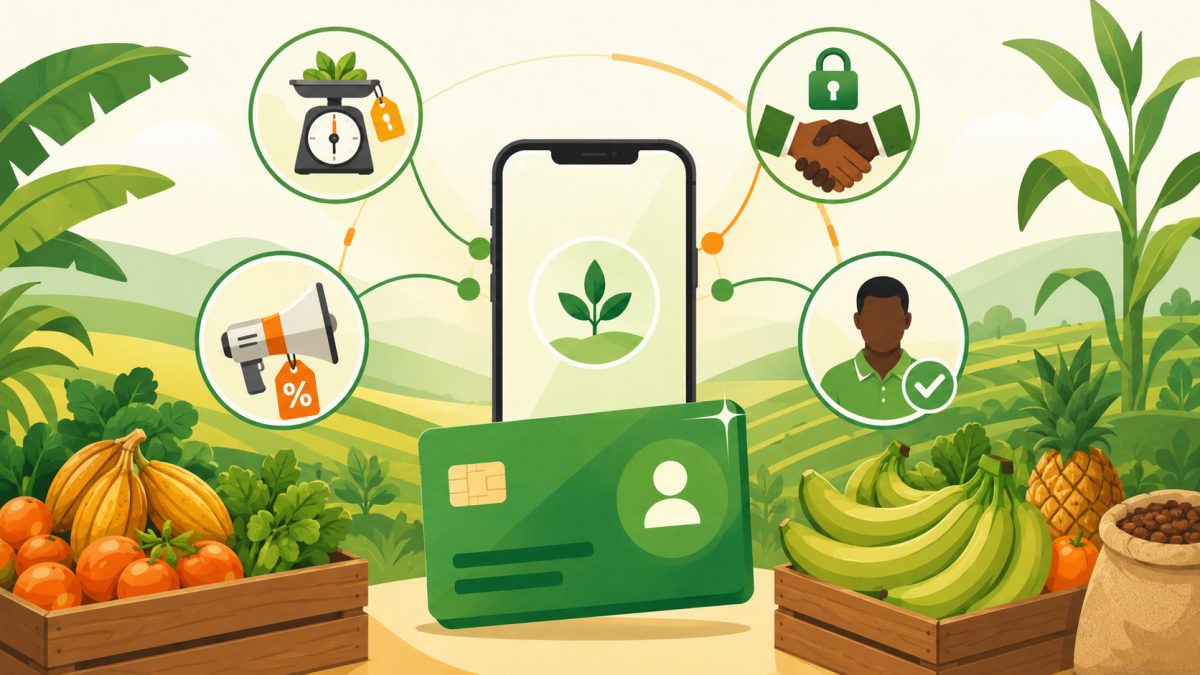
The Jangolo ecosystem offers several tools that can significantly accelerate Cameroon’s rice value chain:
Jangolo Market Prices — Price Transparency
Real-time access to market prices in multiple Cameroonian cities, contributed by the agribusiness community itself. Rice producers can compare prices between Yaoundé, Douala, Garoua, and Maroua before deciding where and when to sell. For more: how real market prices help farmers, traders and buyers make better decisions.
Jangolo Trades — Direct Producer-to-Buyer Connections
B2B marketplace where producers publish their rice offers and buyers (processors, distributors, restaurateurs, exporters) publish their demands. This reduces dependence on informal intermediaries and lets producers reach buyers beyond their immediate region. Details in this article on Jangolo Trades.
Jangolo Experts — Access to Technical Expertise
Connection with agronomists, agricultural advisors, and rice-sector experts for technical advice on improving yields, seed selection, soil management, and irrigation. On-demand expertise for producers wanting to modernize their practices.
AgroAssur — Reducing Climate and Operational Risks
Agricultural risk management tools — climate, pests, equipment failures — designed to help producers secure their operations. Particularly relevant for rice cultivation, which depends heavily on water and is sensitive to climate variation.
Visibility and Sector Structuring
By making rice-sector actors discoverable on the platform — producers, cooperatives, millers, distributors — Jangolo helps structure a sector that is currently largely informal. This shift transforms a fragmented market into a connected ecosystem. (See how Jangolo connects the entire agribusiness value chain.)
Conclusion: Potential Waiting to Be Activated
Cameroon’s rice value chain has enormous growth potential. Reducing the import bill, improving rice farmer incomes, and strengthening national food security are not incompatible objectives — they reinforce each other.
Getting there requires combining three things: modernization of agricultural practices, more structured market infrastructure (logistics, storage, processing), and a digital infrastructure that connects actors. The technical solutions exist. The markets exist. What’s often missing is coordination — and that’s exactly what a platform like Jangolo aims to solve.
Consumers also have a vital role: choose local rice, support Cameroonian producers, and advocate for a robust sector. Together, we can build a thriving and sustainable rice industry in Cameroon.
Read more
- Cameroon’s Cocoa Value Chain: An Underexploited Treasure
- From Informal Trading to Structured Agribusiness Markets
- Why Market Prices Are the Missing Infrastructure of African Agriculture
- Why Every Agripreneur Should Be on Jangolo
Rice producer, processor, or buyer in Cameroon? Join Jangolo and connect to the African agribusiness ecosystem →
Partager :

Discover more from Jangolo Blog
Subscribe to get the latest posts sent to your email.