From Informal Trading to Structured Agribusiness Markets
Available in French: Du commerce informel aux marchés agribusiness structurés
How Africa’s agricultural value chain is evolving
Across Africa, millions of farmers cultivate crops, raise livestock, and supply food to rapidly growing cities. Agriculture remains one of the continent’s most important economic sectors, employing a large share of the population and sustaining rural communities. Yet despite this enormous production potential, agricultural markets across the continent often remain fragmented, informal, and inefficient.
Farmers struggle to find reliable buyers. Buyers struggle to identify trustworthy suppliers. Prices vary dramatically from one region to another. And transactions frequently depend on informal networks of intermediaries. This raises an important question for the future of African agriculture: how can agribusiness move from informal trading networks to structured, transparent markets?
The historical role of informal trading
In many African countries, agricultural markets developed long before modern logistics systems, financial services, or digital technologies existed. For decades, agricultural trade has relied heavily on informal intermediaries, commonly known as middlemen. These actors traditionally perform several important functions:
- Aggregating produce from smallholder farmers
- Transporting goods to urban markets
- Connecting producers with wholesalers
- Providing immediate cash payments after harvest
In environments where farmers lacked access to infrastructure, credit, or market information, these intermediaries played a critical economic role — helping bridge the gap between rural production zones and urban consumption centers. While this system allowed trade to function, it also introduced several structural challenges.
The structural weakness of informal markets
Although informal trading networks have been essential to the development of agricultural markets, they also create inefficiencies that limit the growth of agribusiness.
Information asymmetry
One of the biggest challenges is the lack of transparent market information. Farmers often do not know the real market value of their products, while buyers may struggle to identify available supply in different regions. Those who control information frequently gain the greatest advantage. (Our 6-part series on market prices as missing infrastructure goes deeper on this.)
Limited market access
In many rural areas, producers sell their harvest to the few traders who happen to visit their community. This lack of competition reduces the farmer’s bargaining power and often leads to lower selling prices.
Fragmented supply chains
Agricultural production is typically distributed among thousands of small producers. Without systems that organize and aggregate supply, buyers find it difficult to secure reliable quantities and consistent quality.
Lack of transparency
Many transactions occur without written agreements or traceable documentation. This creates uncertainty for multiple actors in the value chain — buyers, processors, exporters, and financial institutions — making it harder to build long-term commercial relationships.
Difficulty scaling agribusiness
For companies looking to expand operations, informal markets can become a major barrier. Without structured trading systems, agribusinesses face unstable supply chains, unpredictable pricing, and complex sourcing processes — making it harder to scale production and distribution.
The rise of structured agribusiness markets
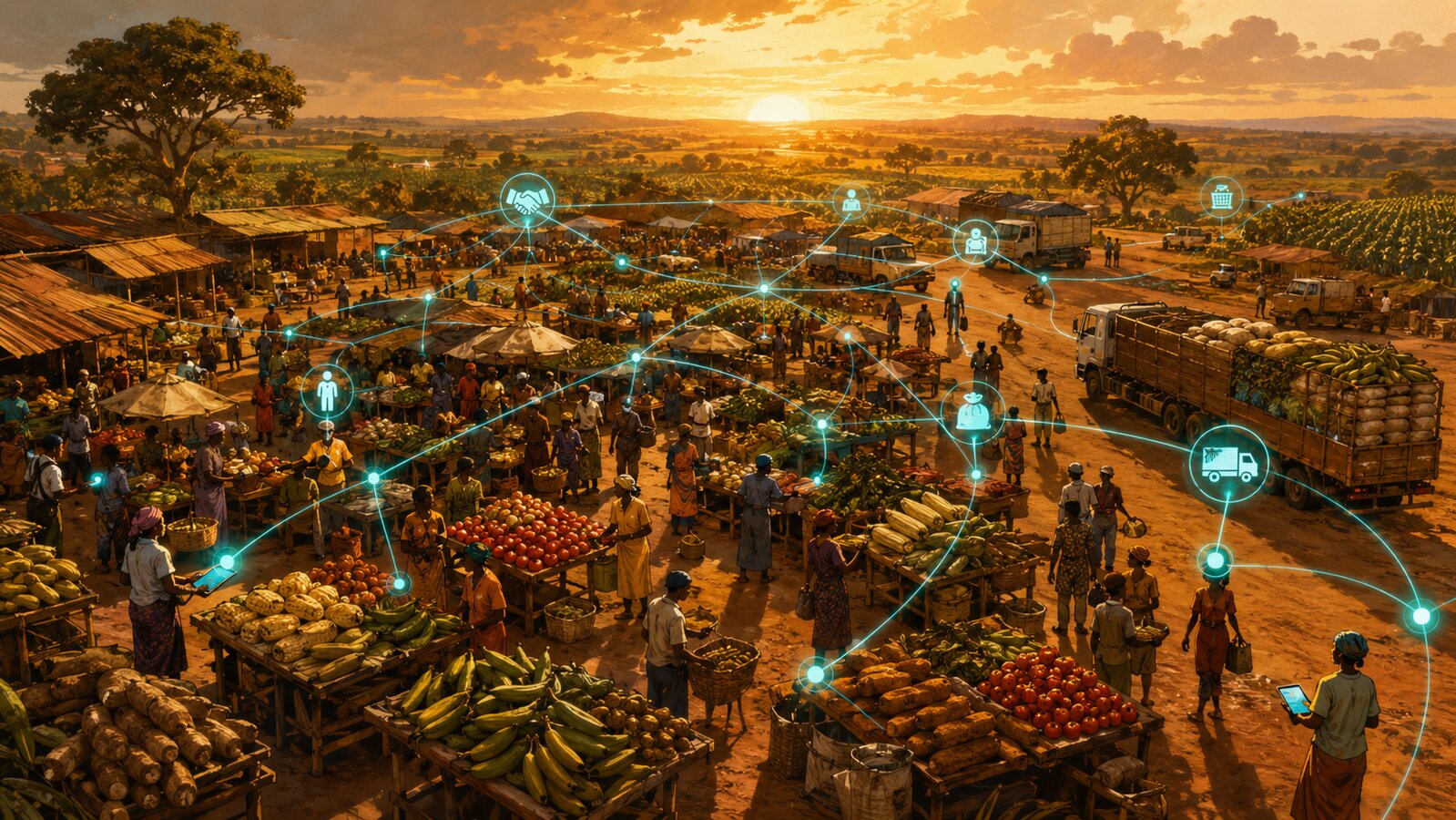
As African economies grow and digital technologies become more accessible, agricultural markets are beginning to evolve. Across the continent, a gradual shift is taking place from informal trading networks to structured marketplaces. Structured markets introduce several important improvements:
- Transparency — supply and demand become visible to a broader range of actors
- Competition — farmers can access multiple buyers rather than depending on a single intermediary
- Efficiency — buyers can identify producers and sourcing opportunities more quickly
- Traceability — transactions can be documented and tracked more easily
- Scalability — large buyers can source from wider networks of producers
In essence, structured markets create the foundation for a more organized and efficient agribusiness ecosystem.
Digital platforms: the infrastructure of modern agribusiness
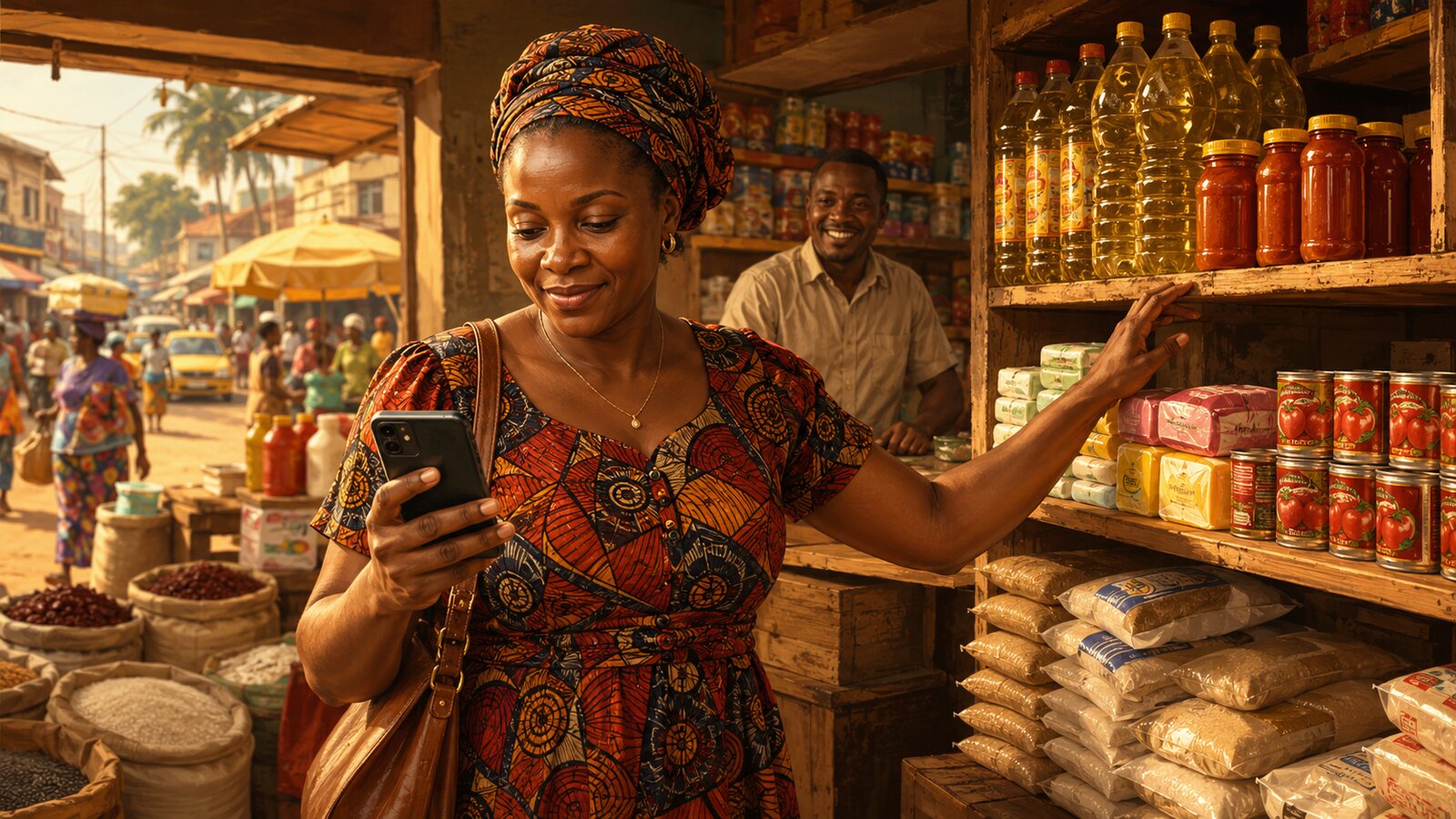
Technology is accelerating this transformation. Just as digital platforms revolutionized industries such as transportation, hospitality, and retail, they are now reshaping how agricultural markets operate. Digital marketplaces make it possible for agribusiness actors to:
- publish supply offers
- submit sourcing requests
- discover new trading opportunities
- connect with partners beyond their immediate networks
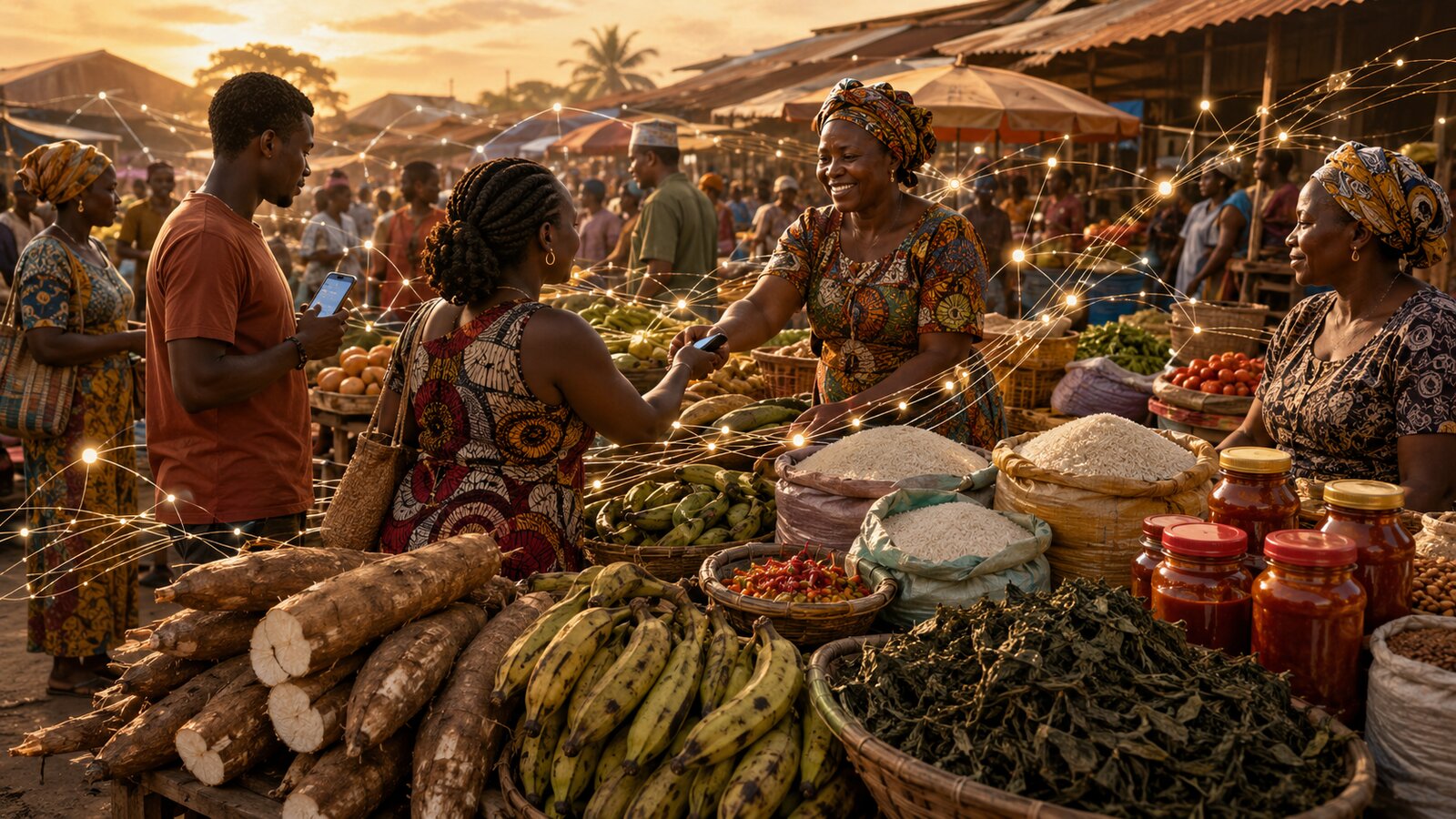
Instead of relying exclusively on personal contacts or local intermediaries, producers and buyers can interact within transparent digital ecosystems. These platforms serve as the new infrastructure for agricultural markets.
Jangolo Trade: structuring agricultural markets
One example of this new generation of market infrastructure is Jangolo Trade — a B2B marketplace designed to connect agricultural producers, traders, and buyers across Africa. Rather than depending on opaque trading networks, participants engage through structured trading requests, including:
- Offers from producers who want to sell agricultural products
- Demands from buyers searching for specific commodities
Each request includes essential information — product type, available quantity, location of the goods, and expected price — allowing market participants to identify opportunities quickly and establish direct contact.
A new role for intermediaries
Structured marketplaces do not eliminate intermediaries. Instead, they transform their role within the value chain. In modern agribusiness ecosystems, intermediaries can focus on activities that genuinely create value, such as:
- aggregating products from multiple farmers
- organizing transportation and logistics
- providing storage infrastructure
- facilitating exports
- ensuring product quality
By making market information transparent, platforms like Jangolo encourage intermediaries to contribute real operational value rather than simply controlling access to information.
Building Africa’s agribusiness ecosystem
The future of African agriculture will depend not only on production capacity, but also on how markets are organized. To unlock the full potential of the sector, stakeholders need:
- better access to market information
- stronger connections between value chain actors
- transparent trading environments
- scalable sourcing systems
Digital platforms are emerging as a key tool in this transformation. By helping market participants move from informal trading networks to structured marketplaces, initiatives like Jangolo contribute to building a more efficient, transparent, and connected agribusiness ecosystem.
The next step for African agribusiness
Agriculture in Africa is entering a new phase. Production continues to increase, urban demand is expanding rapidly, and technology is improving market access. The next challenge is clear: transform fragmented trading systems into structured agribusiness markets that benefit all actors in the value chain.
By enabling producers, traders, and buyers to connect more efficiently, digital platforms like Jangolo are helping make this transformation possible.
Want to go deeper?
This article is the entry point to a broader conversation about digital agribusiness. Explore our 6-part series on agricultural market prices and the digital infrastructure transforming African agribusiness:
- Why Market Prices Are the Missing Infrastructure of African Agriculture
- How Real Market Prices Help Farmers, Traders and Buyers Make Better Decisions
- Agricultural Trading Is Broken — Here Is How Digital Platforms Fix It
- How Jangolo Trade Connects Producers, Buyers and Distributors
- Understanding the Agribusiness Value Chain
- How Jangolo Connects the Entire Agribusiness Value Chain
Ready to be part of Africa’s structured agribusiness market? Get started on jangolo.cm/trades and follow our guide: How to Sell with Jangolo Trade →
Partager :

Discover more from Jangolo Blog
Subscribe to get the latest posts sent to your email.