Even Small Producers Can Use Promotions to Sell More
Disponible en français : Même les petits producteurs peuvent utiliser les promotions pour vendre plus
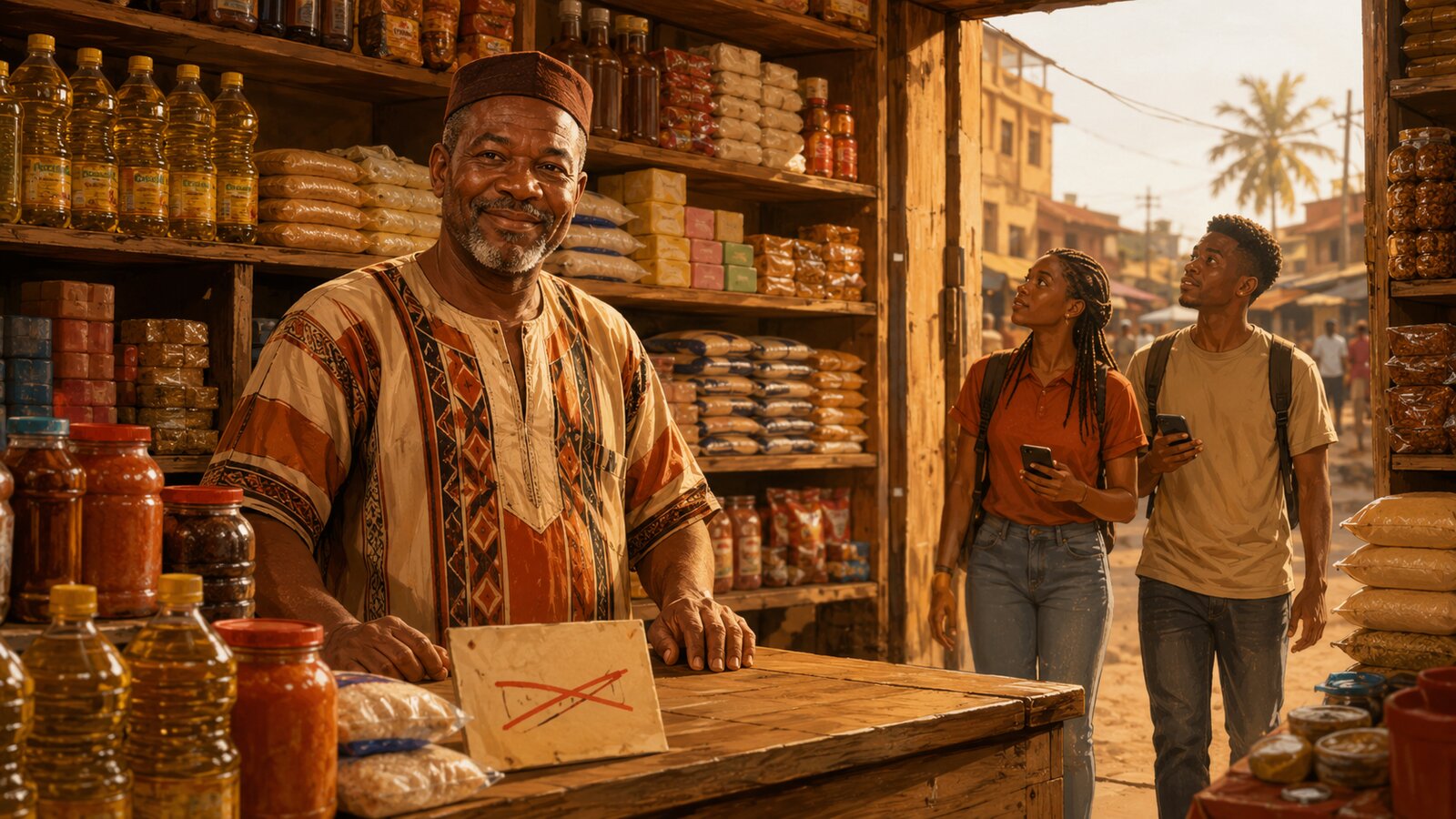
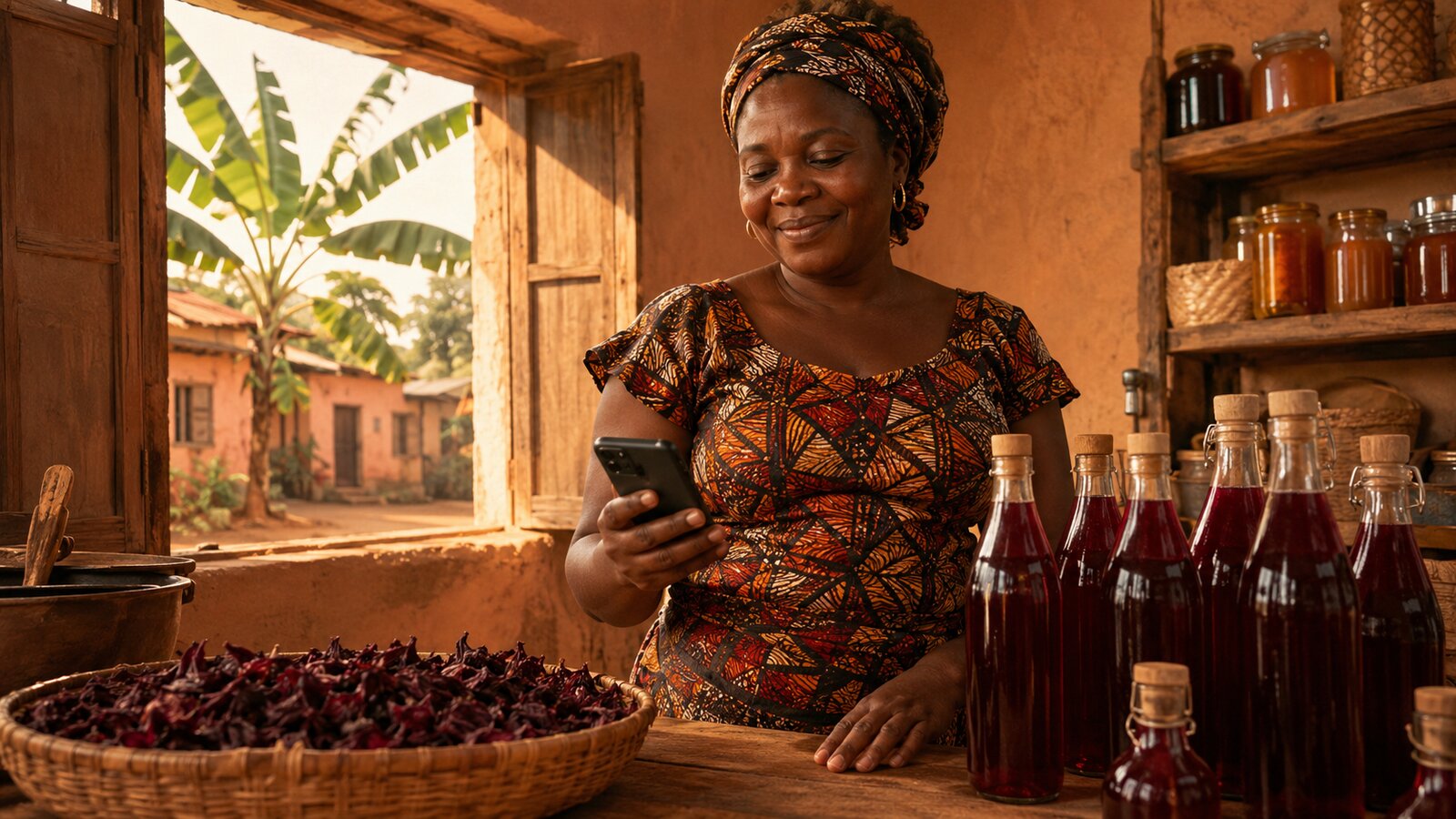
Every week, Mama Esthé prepares 80 bottles of bissap in her small workshop in Ebolowa. Good bissap, made with dried hibiscus from the garden, sweetened just right, no colouring. Her regulars come for their bottles on Saturday. But she could sell 200, maybe 300. The problem isn’t quality or price — it’s that no one knows she exists beyond her neighbourhood.
When someone suggests she « run a promo, » Mama Esthé smiles politely: « Promos are for the big brands. Me, I just make my bissap. » That sentence sums up a belief that costs a whole generation of Cameroonian producers.
This article speaks to Mama Esthé and to every small producer, artisanal processor, village cooperative, and food SME in Cameroon. The promise is simple: promotions are for you too, and they can transform your business more than they would any large brand. Here’s why, and how.
The myth: « Promotions are for big brands »
Where does this belief come from? From an era when « running a promotion » meant: pay an ad budget, negotiate with a distributor, print posters, mobilise a sales team, track sales data over months. Naturally, in that model, only large companies could play.
Today, that model is no longer the only one. A promotion can be published in 15 minutes, seen by thousands of consumers, and evaluated in days — no ad agency, no budget, no intermediary. The playing field has levelled. And on this new field, small producers have advantages big brands don’t.
Why small producers have a structural promotional advantage
This claim may surprise, but it holds on four concrete dimensions.
1. The authentic story
A large industrial brand sells on the brand itself. A small producer sells on their story. The hibiscus flower from the family garden, honey harvested in the Mbam, palm oil pressed by hand, peanuts roasted over wood fire — that’s marketing gold multinationals spend millions trying to imitate. You have it for free.
2. Small stock is easier to manage
For an industrial player, a promotion means mobilising tens of thousands of units. For you, mobilising 100, 200 or 500 bottles is doable by Monday. That agility lets you test operations without structural risk. If it works, you repeat. If it doesn’t, you adjust without having torn through your annual margins.
3. Direct relationship with the consumer
A large brand talks to its audience through ads. You can talk directly to your first customers: ask what they thought, adjust your recipe, offer a new format. That fast feedback loop is unavailable to giants. It’s your most powerful advantage.
4. The consumer is actively looking for what you offer
A growing share of urban Cameroonian consumers — especially young households — actively looks for local, authentic, terroir products. They’ve had enough of all-imported. But they don’t know where to find good bissap, good honey, good artisanal oil. They are out there, waiting — and they’re looking for you. What’s missing is just the channel that puts you in front of them.
Three types of promotions that work for small producers
Not all promotions are equal. For a small producer, three formats are especially powerful — each activating a different mechanism.
The « discovery » promo
Your main goal isn’t to sell more to existing customers — it’s to become known by new ones. A -20 or -25% promotion for 2-3 weeks on your flagship product gives the curious the perfect pretext to try. Once they’ve tasted your bissap, honey, oil, many will come back at full price. Promo cost is actually a marketing investment — the cheapest one you have.
The « harvest » or « season » promo
If you transform a harvested product (peanut, mango, maize, cassava, pineapple), there’s a window when raw material is abundant and you can produce more than usual. Perfect moment for a seasonal operation: « During season X, our product Y at an exceptional price. » You move your peak production and you build loyalty with customers who return out of season.
The « volume » promo
Some of your customers would love to buy in volume — for a restaurant, a ceremony, diaspora travellers stocking up before flying home. A promotion on grouped orders (e.g. -15% from 20 units up) unlocks that segment without touching your retail price. It’s one of the most profitable promos for a small producer: a high-volume customer is worth 30 low-volume ones in logistical effort.
For cooperatives: a tool for collective monetisation
The topic takes a special dimension for Cameroonian cooperatives, especially those accompanied through the Jangolo Ambassadors Programme and the PADFA II Innovation Fund. For a cooperative gathering 30, 50 or 100 producers, promotions are a powerful collective lever:
- Mutualised visibility: a campaign in the cooperative’s name makes all its members known, not one by one.
- Coordinated harvest clearance: instead of absorbing the low prices intermediaries impose during gluts, the coop publishes a collective promotion and finds buyers directly.
- Building a collective brand: « Rice from Cooperative X, » « Honey from the Mbam producers » become identifiable references, not anonymous products.
- Shared market data: the coop learns, campaign after campaign, what works, at what prices, in which cities. A collective marketing intelligence that benefits every member.
This is exactly what the PADFA II programme and the Focal Points deployed on the ground are here to accompany: turning cooperatives that produce well into cooperatives that produce and know how to value what they produce.
How to start: 15 minutes is all you need
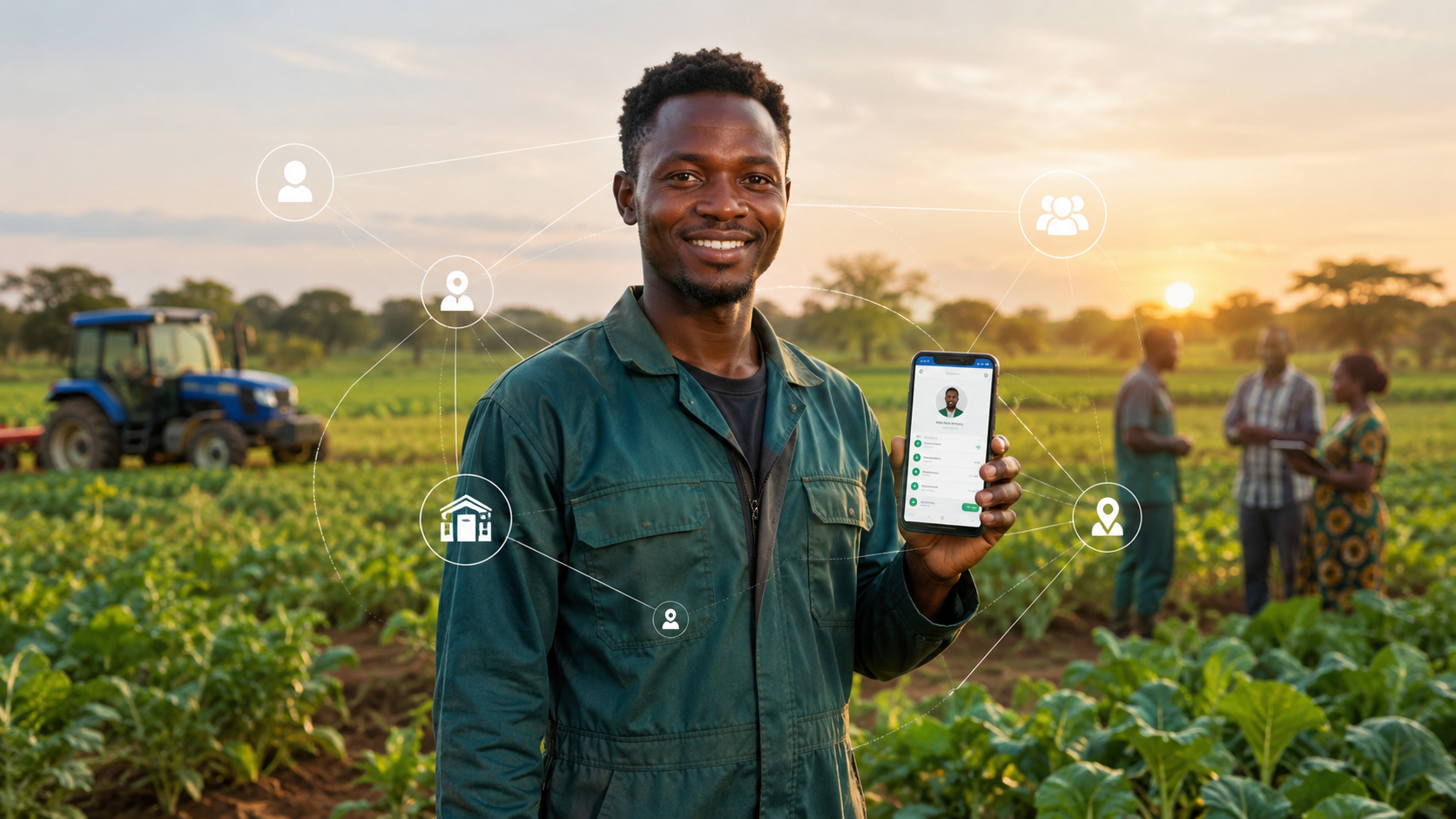
Concretely, here’s the minimum-viable promo Mama Esthé — or any small producer — can post today on Jangolo Promotions:
- Pick your flagship product. The one you make best, that you’re proud of, that identifies you. Not your most expensive one — your most representative one.
- Set your promo price. -15 to -25% is plenty. No need to go lower for the discovery effect.
- Prepare initial stock. 50, 100, 200 units depending on your capacity. Better to under-estimate and restock than over-estimate and manage a tough end-of-stock.
- Take good photos. Your phone is enough. Natural light, simple background, your product in the foreground. A good photo does 80% of the work.
- Publish the offer. 15 minutes to create your profile, add the photo, the price, the duration, your address or pickup point. It’s live. Visible. Searchable.
From day one, watch: who calls, who comes by, who buys in volume. After two weeks, you’ll know more about your market than everything you’ve learned in 5 years of local selling. That’s the advantage of a digital infrastructure open to everyone.
A new generation of producers visible at city scale
Imagine what the Cameroonian food ecosystem becomes when 1,000, 5,000, 20,000 small producers publish their offers on a common infrastructure. Something unprecedented emerges: a structured, visible, comparable Cameroonian terroir market.
Mama Esthé’s bissap from Ebolowa, honey from the Mbam, palm oil from the West, peanuts from the North, smoked fish from the South-West, rice from the Logone cooperatives — each finding its place, its audience, its price. No more two-speed Cameroon (imported visible, local invisible). A market where local wins because it is seen.
This vision isn’t a dream. It is built, offer by offer, producer by producer, coop by coop. And it starts with the next promo you publish.
The full series
- Article 1 — African Food Commerce Has a Visibility Problem
- Article 2 — Why Food Promotions Have Become Essential in Cameroon
- Article 3 — How to Find the Best Food Promotions Near You
- Article 4 — Why African Consumers Will Shop Differently in the Years Ahead
- Article 5 — Why Promotions Are a Strategic Tool for Agroindustries
- Article 6 — How Shops Attract More Customers Through Digital Promotions
Share this content:
Partager :

En savoir plus sur Jangolo Blog
Subscribe to get the latest posts sent to your email.