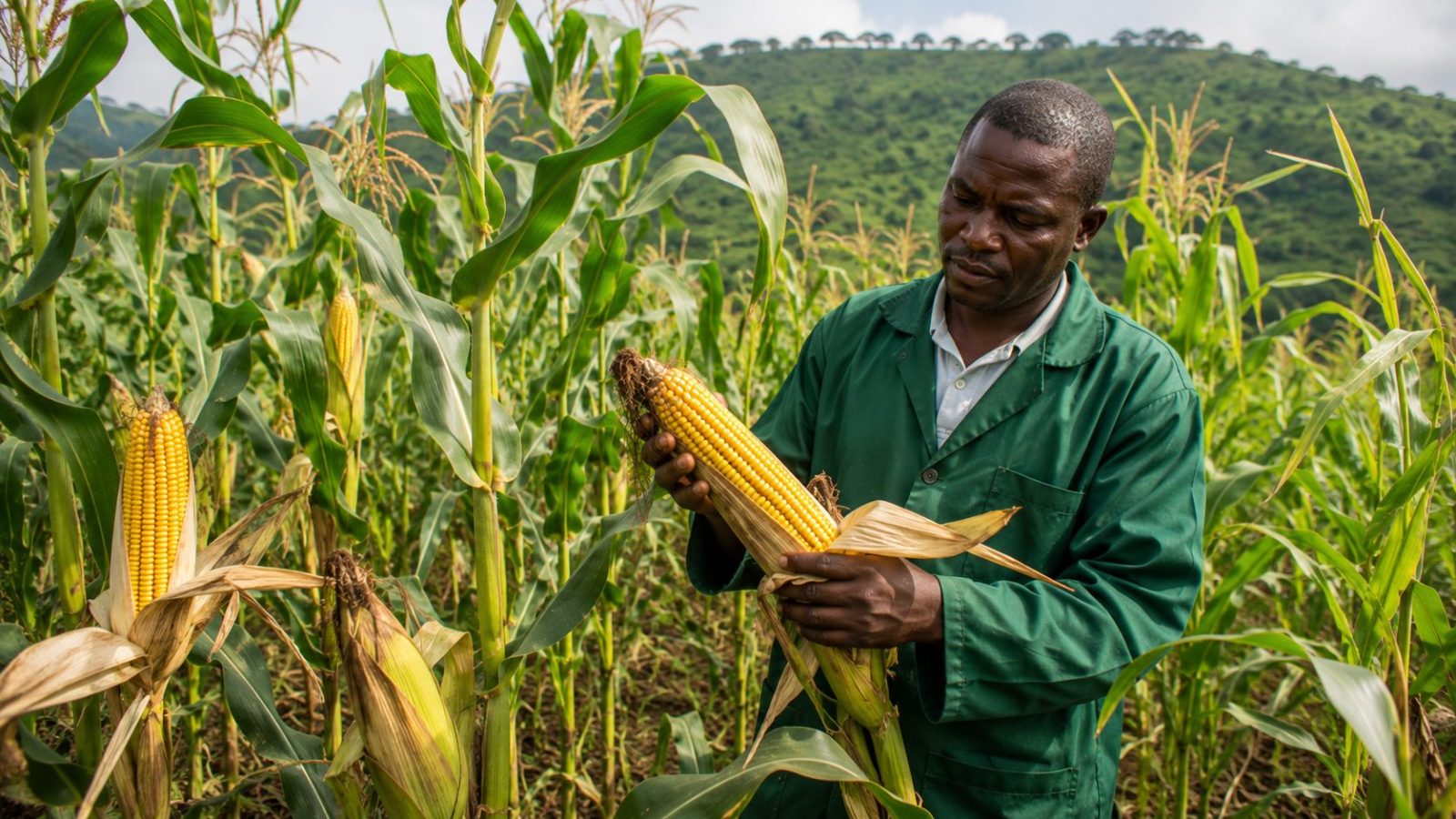
Maize Farming in Cameroon: Techniques, Yield and Markets
Maize is one of Cameroon’s most strategic crops. A staple food for millions, a raw material for poultry and pig feed, it sells year-round and finds buyers easily. For a farmer it is an accessible, versatile crop — provided a few fundamentals are mastered. Here is how to succeed at maize farming.
Why grow maize
Demand is twofold: human consumption (flour, couscous, porridge, grilled cobs) and animal feed, where it is a major ingredient for poultry and pigs. This double demand secures outlets and limits unsold stock. Maize adapts to many agro-ecological zones and can be grown in several cycles depending on rainfall.
Choosing seed and plot
Seed choice is decisive: improved varieties yield better and resist disease more than ordinary seed. Prefer certified seed suited to your zone and season. Maize likes deep, well-drained, organic-rich soils; good ploughing, a clean plot and, if possible, organic manure prepare an even emergence.
Crop management
Sow in lines at regular spacing for optimal density. Maize is demanding in nitrogen: splitting fertiliser applications (at sowing then during growth) improves yield. Early weeding is crucial, as weeds strongly compete with young maize. The fall armyworm is now a major enemy: regular scouting and a fast response at first outbreaks limit damage; rotation and clean plots reduce pest pressure.
Harvest, drying and storage
Harvest when grains are well formed and dry. Drying is key: poorly dried maize stores badly and loses value. Storage away from moisture and weevils preserves quality until sale and lets you wait for a better price window.
Outlets and profitability
Maize sells to households, feed mills, livestock farmers and processors. Profitability depends on yield per hectare, cost control and sale timing. Storing to sell during the lean season, when prices rise, pays off for those with good storage.
In summary
Maize combines accessibility, versatility and assured outlets — ideal to start or diversify. Success rests on good seed, controlled fertilisation, rigorous pest control and careful drying and storage.
Read more
Partager :

Discover more from Jangolo Blog
Subscribe to get the latest posts sent to your email.