Selling to supermarkets and buying centrals in Cameroon
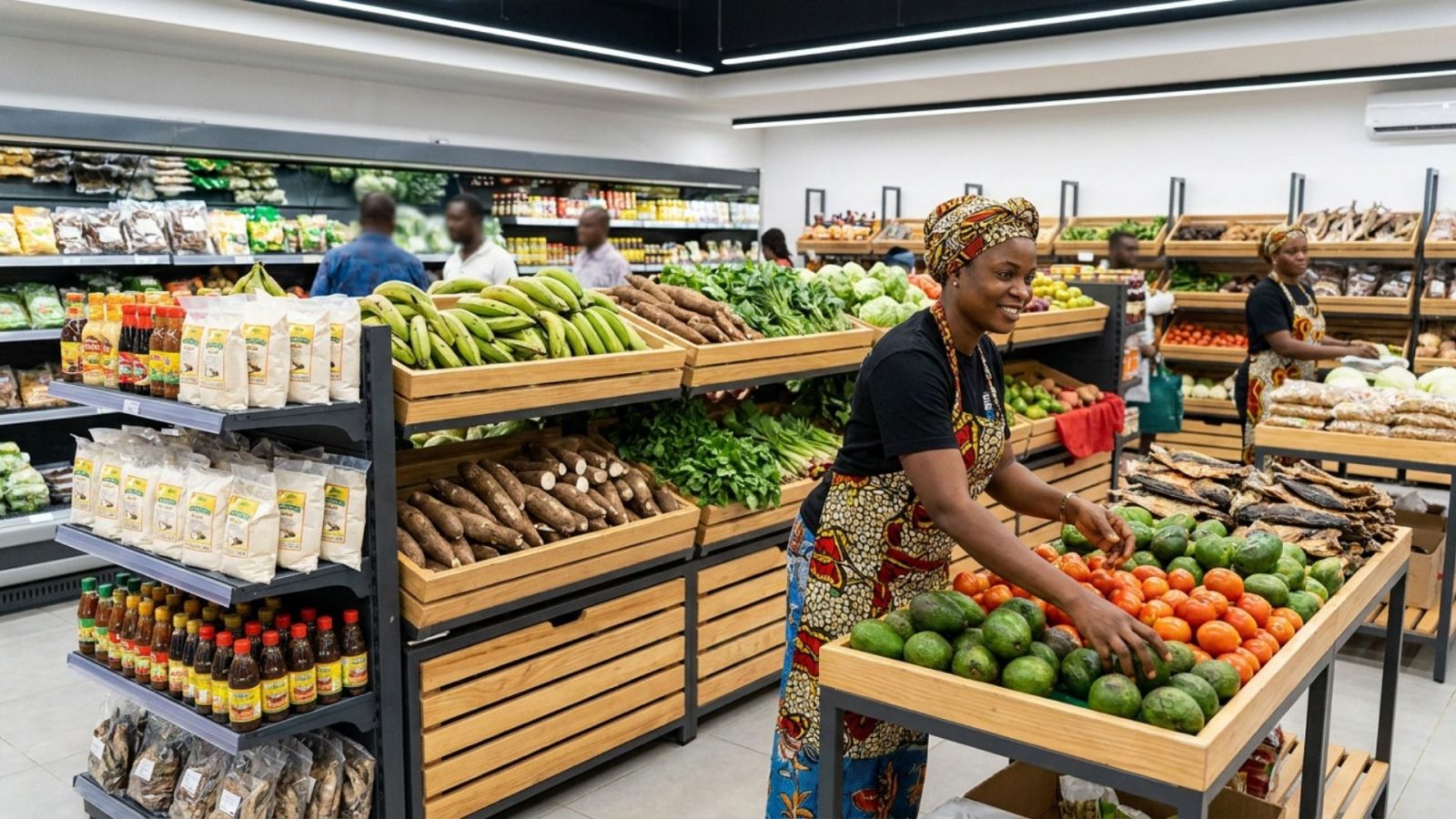
Cameroon’s supermarkets — Carrefour, Dôvv, Mahima and others — are a premium outlet: regular volumes, structured payment, and a showcase for your brand. Dôvv alone claims more than 22 stores in Yaoundé and promotes local products among hundreds of suppliers. The trick is knowing how to get in. Here are the essentials.
Why target modern retail
- Regular orders: a successful listing means recurring business rather than a one-off sale.
- A showcase: being on the shelf of a known chain builds credibility for your brand.
- Local is valued: against the buying centrals of international chains, Cameroonian retailers highlight fresh, authentic local products — a real card for local producers to play.
What supermarkets require
This is where many fail. To get listed, you must offer:
- Consistency: the ability to deliver the same quality, in sufficient quantity, without stockouts. Retailers hate an empty shelf.
- Constant quality and grading: rigorous sorting, a product that’s uniform from one delivery to the next.
- Careful packaging and labelling: clean packaging, clear information (product, weight, dates).
- A formal trading relationship: proper invoicing, terms and payment delays — often deferred, which weighs on your cash flow.
Buying centrals: how they work
Large chains go through a buying central that pools orders, negotiates prices and organises restocking (sometimes once or twice a week). For a producer, targeting the central rather than a single store means larger volumes — but with proportional demands.
Getting your product listed, step by step
- Prepare a clear file: product sheet, price, packaging, delivery capacity, any certifications.
- Present samples: the buyer wants to see and taste before listing.
- Check your capacity: only promise what you can deliver sustainably.
- Negotiate the terms: price, frequency, payment delays — and anticipate the cash-flow gap.
- Last over time: consistency builds the relationship. One stockout and you lose the listing.
Pitfalls to avoid
- Underestimating cash flow: payment often comes after delivery; plan for the gap.
- Over-promising: a manageable volume beats a stockout that destroys trust.
- Neglecting the formal side: no compliant invoicing or packaging, no listing.
Read also
Packaging and pricing to stay competitive · Every channel for selling your farm produce
Frequently asked questions
Do you need a large farm to sell to supermarkets?
Not necessarily, but you need regular, consistent delivery capacity. Grouping together (a cooperative) helps reach the required volumes.
Do supermarkets pay cash?
Rarely: payments are often deferred. Build this gap into your cash flow before committing.
Is it better to target a store or the buying central?
The central offers larger volumes but stricter requirements. A local store can be a good first step.
Going further
Modern retail is demanding but loyal. Beyond supermarkets, explore every sales channel. Ready to get noticed by buyers? Publish on Jangolo.
Partager :

Discover more from Jangolo Blog
Subscribe to get the latest posts sent to your email.