SIMRO: Cameroon’s National Market Information Platform for Rice and Onion
Updated June 2026 — rice and onion prices are refreshed every week on the official SIMRO platform (MINADER / PADFA II, with IFAD support).
Why agricultural markets need a public information system
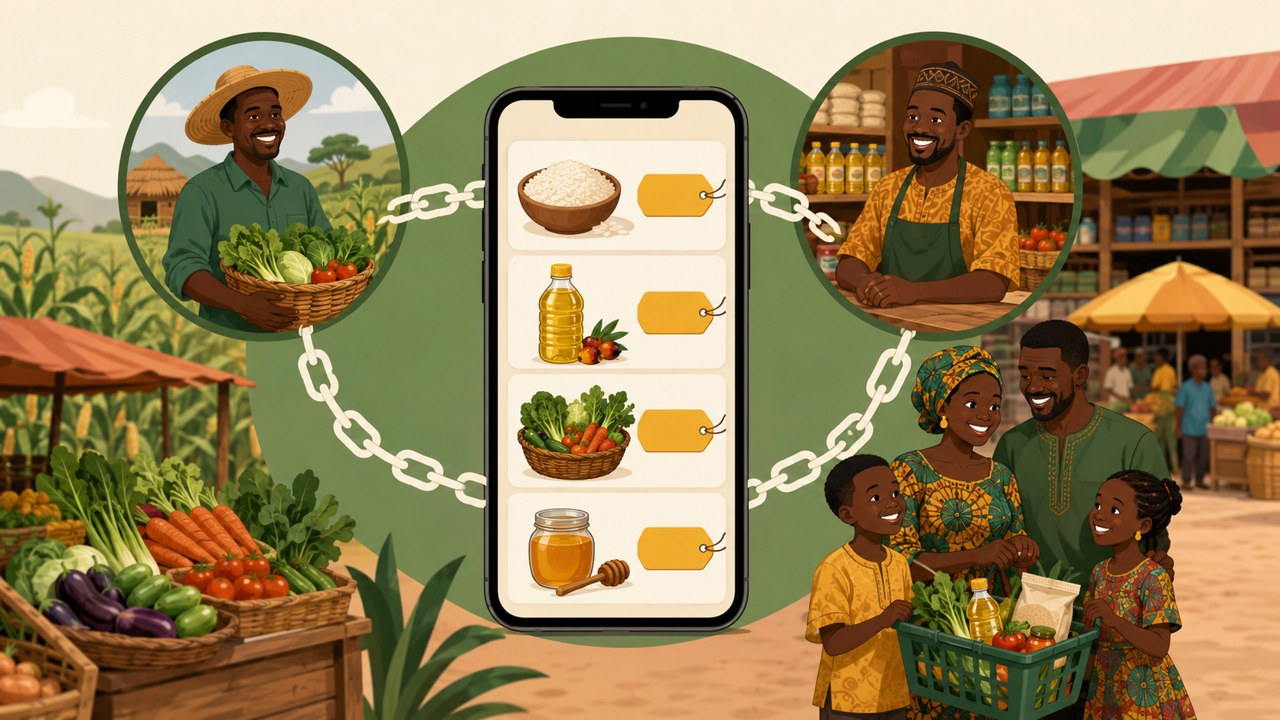
In most Cameroonian agricultural value chains, smallholders sell blind. Without reliable data on the prices traded in neighbouring markets, on demand from major cities, or on the volumes that were available at the same time of year a year earlier, the producer is more often subject to the market than able to negotiate it. Middlemen, on the other hand, live precisely off that asymmetry.
For the strategic rice and onion value chains, the MINADER and PADFA II decided to flip the equation by building a public, free and national tool: SIMRO.
What is SIMRO?
The Système d’Information sur les Marchés du Riz et de l’Oignon au Cameroun (SIMRO) — the Rice and Onion Market Information System of Cameroon — is an official platform developed by PADFA II (the second phase of the Programme d’Appui au Développement de la Filière Agricole, the Agricultural Value Chain Development Support Programme). It serves the entire chain:
- Producers within rice and onion cooperatives
- Traders and merchants
- Processors (rice mills, packaging units)
- Input suppliers (seeds, fertilisers, plant protection products)
- Public authorities and regulators
Its mission, as defined by PADFA II, is to « improve sales margins and the rapid flow of agricultural products, create a level playing field for everyone, and promote a fair and transparent trade. »
Official website: simro-cmr.net.
What you’ll find on the platform
SIMRO is, above all, a living database — updated regularly and explorable by market and region. In practice, it offers:
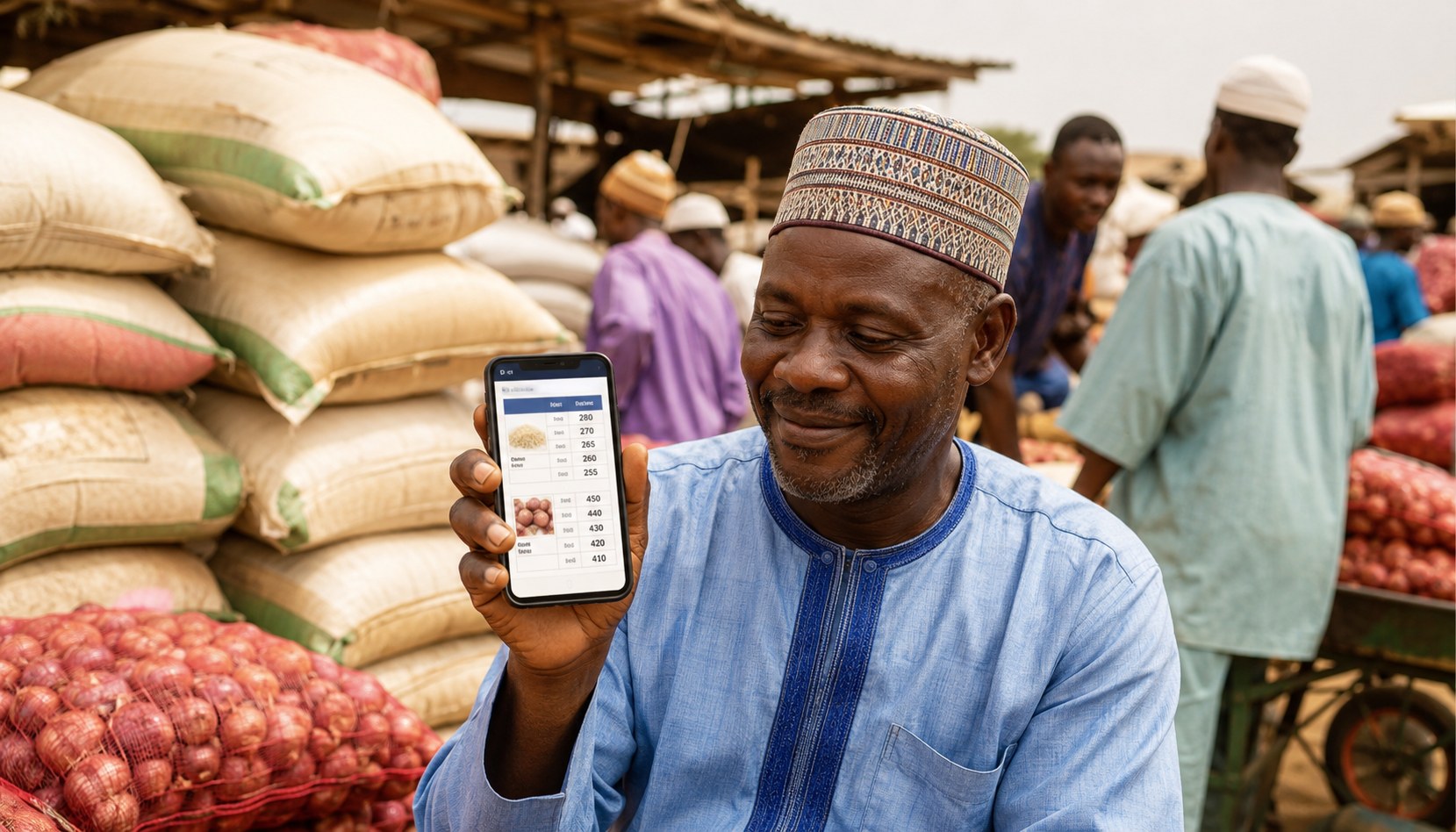
- Live prices for products and inputs: paddy rice, banchi long grain rice, locally parboiled rice, rice seeds; onion bulbs, local onion, imported onion, onion seed bulbs; fertilisers (natural, chemical, organic), herbicides, plant nutrients.
- Sectoral indicators filterable by region, division, sub-division, market and store.
- A directory of value-chain actors (production, trade, processing, input supply), with their contacts and value chains.
- A directory of input stores in your area.
- Weekly bulletins and technical sheets prepared by PADFA II’s experts — for instance, the technical sheet on onion harvesting and field handling operations.
For a cooperative leader in Mayo-Danay or a wholesaler in Douala, this is the agricultural equivalent of a stock ticker: everyone sees the same information, at the same time.
Direct access to the SIMRO sections
The platform is organised into sections you can open directly:
- Prices: rice and onion prices, market by market, updated weekly.
- Key figures: the reference indicators for both value chains.
- Directory of players: producers, traders, processors and input suppliers, with their contacts.
- Stores: nearby storage points and input shops.
- Bulletins: weekly bulletins and downloadable technical sheets.
What the prices reveal: the concrete value of the data
The real power of SIMRO is seeing trends and gaps between markets. A few recent readings for bulb onion (price per kg, in FCFA) show the seasonality:
| Market | High supply (Feb–Apr 2026) | Lean season (Nov–Dec 2025) |
|---|---|---|
| Bambili (North-West) | ≈ 300 | ≈ 700 |
| Bamenda Food Market | ≈ 500 | ≈ 1,000 |
| Mawa-Mozogo (Far North) | ≈ 100–150 | ≈ 200 |
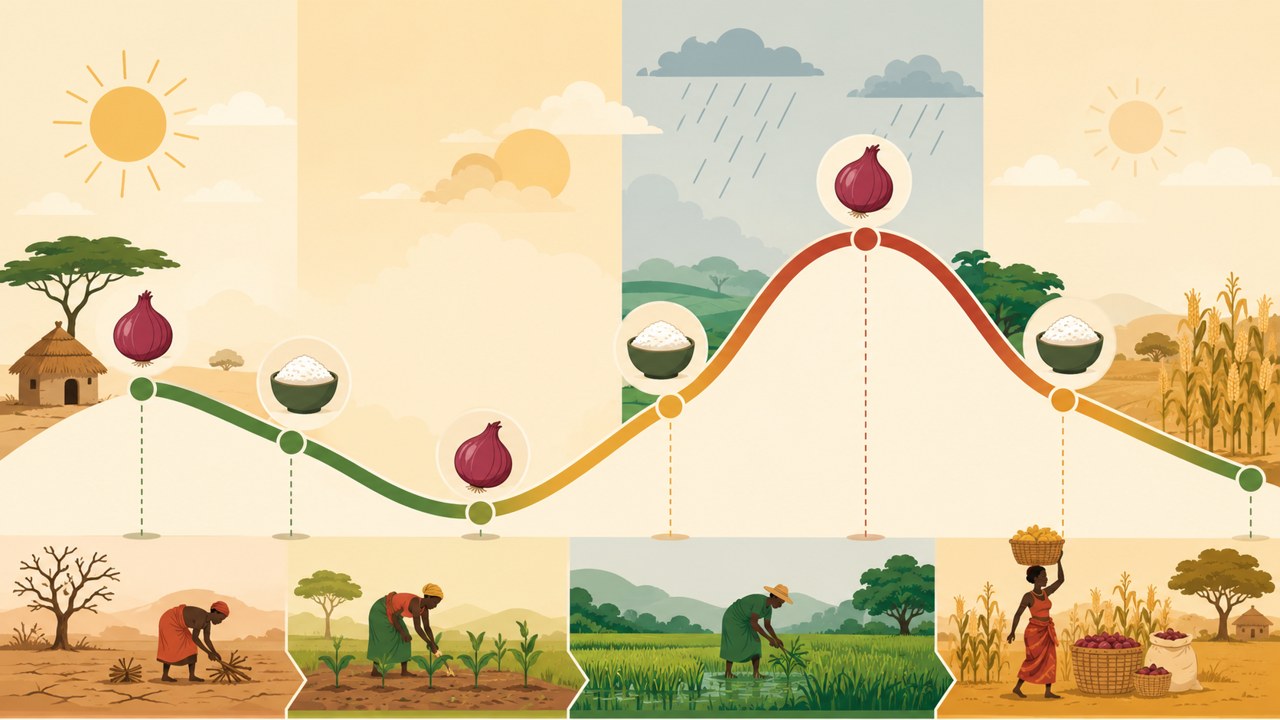
Reading: in Bamenda, the price nearly doubled between peak harvest and the lean season. A producer who knows this cycle can store, stagger sales or target another market instead of selling everything at the bottom — exactly the trap we describe in “selling your harvest blind“.
Why SIMRO is a game-changer for cooperatives
For the 65+ rice and onion cooperatives that are partners of the PADFA II Innovation Fund, SIMRO transforms four key dimensions of the daily work:
- The end of information asymmetry. A producer now knows the actual price being traded on the Maroua market before negotiating with a buyer from Yaoundé.
- Anticipating the seasons. Onion prices can swing fourfold between peak season and off-season. With SIMRO’s historical data, cooperatives plan instead of suffering.
- Better decisions at every step in the chain: what to plant, when to harvest, where to store, who to sell to, at what price.
- Direct access to the right channels — through the directory of actors and the input-store registry, there is no longer any need to rely on a chain of opaque middlemen.
The SIMRO + SIMC + Jangolo ecosystem
SIMRO does not work in isolation. It is part of a national agricultural market information ecosystem built around three complementary platforms:
- SIMRO — focused on rice and onion, official MINADER data, public platform.
- SIMC (Système d’Information sur le Marché Climatique — the Climate Market Information System) — broader product coverage, two-tier validation (regional and central), free national hotline accessible via the toll-free number 8248.
- Jangolo — the consumer-facing digital layer: company profiles for every cooperative on jangolo.cm, sectoral magazine, the Mr Jangolo WhatsApp chatbot available 24/7, and over 300,000 followers across social media.
On 7 May 2025, at the PADFA II UCGP offices in Yaoundé, these three players — joined by the SIMRO consultant, the CEO of Jangolo, the National Coordinator of SIMC, the SIMC platform developer, and a representative from A2D — sat together around the same table to lock in a key milestone: technical interoperability between the platforms via APIs, data sharing, and triangulation to guarantee data reliability. The markets covered by PADFA II are now reference markets for SIMC, and a cooperation protocol between SIMRO and Jangolo has been initiated.
The goal is clear: whether a producer consults SIMRO on a desktop, dials SIMC’s free 8248 number, or chats with Mr Jangolo on WhatsApp, they should always access the same verified information, at the same moment, with the same quality.
What does this concretely change for a producer?
Before: a rice farmer in Yagoua sells the harvest to a passing trader at whatever price is offered, never knowing that a bag of rice trades 30% higher in Douala’s main market that same week.
Today: the farmer checks SIMRO or asks Mr Jangolo on WhatsApp, sees the day’s price in Maroua, Garoua and Douala, and negotiates from a position of strength — or simply waits a week to sell at the right moment.
It is the difference between an agricultural economy where value evaporates among middlemen, and one where it returns to the producer.
How to start using SIMRO today
- 📊 Check live market prices. Go to simro-cmr.net to explore prices by market and by region.
- 🏪 Get your cooperative or your store listed. The directory of actors is open — simply reach out to the SIMRO team via the official site.
- 📰 (Re)read the two earlier articles on the cooperatives partnering with PADFA II: Rice value chain (in French) · Onion value chain (in French).
- 📣 Become a Jangolo Ambassador / PADFA Focal Point. The 2026 programme is recruiting 10 ambassadors on the ground to help cooperatives leverage both SIMRO and the Jangolo platform.
Frequently asked questions about SIMRO
What is SIMRO?
The Rice and Onion Market Information System of Cameroon: a public, free platform that publishes prices, a directory of players and bulletins for these two value chains.
Who created SIMRO?
MINADER, through PADFA II (Agricultural Value Chains Development Support Project, phase II), with financial support from IFAD.
Is SIMRO free?
Yes. Consulting prices, the directory of players and the bulletins is entirely free on simro-cmr.net.
Which markets and products are covered?
Rice and onion, across dozens of markets nationwide (North-West, Far North, North, Centre, Littoral…), with a price history per market.
How often are prices updated?
Every week, from field surveys completed by weekly bulletins.
How does SIMRO relate to Jangolo?
SIMRO provides the market information; Jangolo helps you turn that information into a sale, through business profiles, the Jangolo Market Prices barometer and matchmaking with buyers.
Article published as part of the sub-project « Vulgarisation, Commercialisation des produits Riz et Oignon & Digitalisation des acteurs des filières », implemented by Jangolo SARL and co-financed by the PADFA II Innovation Fund (Programme d’Appui au Développement de la Filière Agricole, second phase), under the coordination of MINADER. SIMRO is an official platform of PADFA II.
Partager :

Discover more from Jangolo Blog
Subscribe to get the latest posts sent to your email.